A gaming PC and a video editing PC want most of the same things: a capable graphics card, a fast processor, plenty of memory and quick storage. The difference is where the money should go. A gamer can live with 16GB of memory and a single drive; an editor scrubbing through multi-layer timelines soon runs out of both. That is the decision behind this keyword: which prebuilt gaming tower leaves enough in the memory, storage and graphics columns to double as an editing workstation, and which ones only look the part.
The eight systems below range from an entry-level tower with an older graphics card to a current-generation machine with a Ryzen 7 9700X, an RTX 5070 and a liquid cooler. They suit students cutting short clips, creators moving beyond phone editors, and families wanting one computer for games and homework videos. All remarks are drawn from the listing wording, so confirm the full configuration and warranty details before ordering in 2026.
Our Top Picks
Pros & cons
- 16GB of RAM supports smooth multitasking alongside gaming
- WiFi 6 and Bluetooth 5.0 connectivity are built in
- Free lifetime tech support backs the 1-year parts and labor warranty
- Radeon RX 560 4G is an entry-level card for modern titles
- 512GB SSD may need a storage upgrade for large libraries


Top 3 picks at a glance
Quick Picks
As an Amazon Associate we earn from qualifying purchases at no extra cost to you.


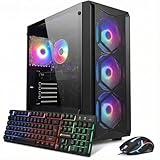
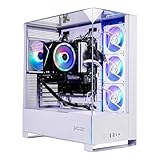


| Product | Best for | Key spec from the title |
|---|---|---|
| KOTIN Prebuilt Gaming PC | Serious editing and gaming | Ryzen 7 9700X, RTX 5070 12GB, 32GB DDR5 |
| ZYNEEX Prebuilt Gaming Desktop | Budget all-rounder | Ryzen 5 5500, RTX 3050 6GB, 16GB DDR4 |
| STGAubron Core i7, RX 580 | Entry-level editing | Core i7, RX 580 8G, 16G RAM, 1T SSD |
| STGAubron Core i7 8th Gen, RTX 3050 | Entry editing with an NVIDIA card | RTX 3050 6G, 16G DDR4, 512G SSD |
| Skytech Archangel 5 | Current-generation mid-range | Core i5 14400F, RTX 5060, DDR5 6000 |
| STGAubron Core i5, RX 550 | Lowest-cost entry system | Core i5, RX 550 4G, 512G SSD |
| STGAubron Core i7, RX 590 | Memory-heavy budget editing | RX 590 8G, 32G RAM, 1TB SSD |
| STGAubron Core i7, GTX 1070 | Older-generation 8GB graphics | GTX 1070 8G, 16G RAM, 512G SSD |
The 8 Best Options
KOTIN Prebuilt Gaming PC (RTX 5070)
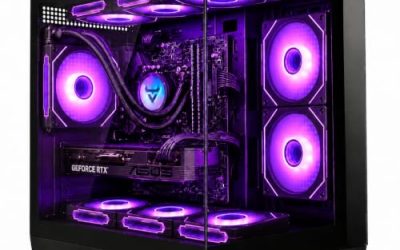
This is the most capable system in the guide, and the only one that reads like a creator workstation. The title lists an RTX 5070 with 12GB of video memory, a Ryzen 7 9700X processor, 32GB of DDR5 memory, a 1TB SSD, an 11.3 inch smart display, an 850W 80+ Gold power supply, a 360mm liquid cooler and WiFi 7.
For editing, the 32GB of DDR5 is the headline: it is the amount many editors treat as a comfortable floor for 4K timelines, and it is rare in a prebuilt. The 12GB graphics card helps with effects and GPU-accelerated exports, and the 360mm liquid cooler suggests the processor was given room to sustain its clocks during long renders.
This is the pick for a creator who treats the PC as a tool for paid or semi-professional work and wants to keep gaming at high settings on the same machine. The editing-relevant details are the memory, the graphics card and the cooling, while the display is a convenience. Buyers should plan a second drive for footage and keep the project cache off the system disk.
- 32GB of DDR5 memory suits multi-layer timelines.
- Ryzen 7 9700X and RTX 5070 form a strong editing pairing.
- 850W Gold power supply and liquid cooler leave upgrade room.
- A single 1TB SSD fills quickly with raw footage, so extra storage is likely.
- The smart display is a novelty that does not help editing.
Skip it if your budget sits firmly in the entry tier. Against the Skytech Archangel 5, it offers more memory and a stronger graphics card, while the Skytech is the simpler step down.
ZYNEEX Prebuilt Gaming Desktop PC
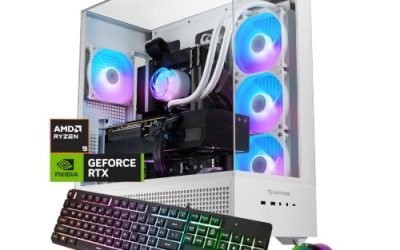
The ZYNEEX is the budget all-rounder with a modern-enough platform. The title shows an AMD Ryzen 5 5500, a GeForce RTX 3050 with 6GB, 16GB of DDR4 memory at 3200MHz, a 1TB NVMe SSD, ARGB air cooling and Wi-Fi in a tower case.
For video editing, the NVMe drive helps with project load times, and the graphics card brings hardware encoding support through its NVIDIA architecture. The six-core processor handles 1080p timelines well, while 16GB of memory is adequate for light work but becomes the first bottleneck when you add effects layers.
It is a sensible match for a student or a first-time creator who wants to edit short videos for a class or a channel and still play popular games. The tower format means the case has room for a second drive and more memory later, which is where the upgrade plan should begin. Think of the ZYNEEX as a platform to grow, not a finished editing station.
- 1TB NVMe storage is more generous than many entry-level builds.
- RTX 3050 brings NVIDIA features used by many editors.
- Ryzen 5 5500 is a six-core chip at a low cost.
- 16GB of DDR4 is the minimum for comfortable editing.
- 6GB of video memory limits heavy effects work.
Skip it if you edit 4K footage regularly. It sits one tier above the STGAubron systems below in platform, while the Skytech climbs further.
STGAubron Core i7 with RX 580
This STGAubron tower is a cost-focused option that leans on an eight-gigabyte graphics card. The title lists a Core i7 processor (up to 3.9GHz), RX 580 8G graphics, 16G of RAM, a 1T SSD and an ARGB fan, and it names streaming and video editing among the uses.
An older AMD card with 8GB of video memory has room for modest effects, though newer cards offer better encoders and software support. The 1TB drive gives a reasonable amount of space for projects, and the i7 branding points to a quad-core or better processor, though the exact model is not named.
This system makes sense for a buyer who edits 1080p footage as a hobby and wants the biggest storage and video-memory numbers at the lowest price. It is less suited to anyone depending on software that leans on a specific vendor’s encoder. The ARGB fan is a styling detail, so judge the build by its drive, memory and card instead.
- 8GB of video memory is generous for the price tier.
- 1TB SSD offers working space for footage.
- Core i7 processor for multi-threaded tasks.
- Older graphics architecture lacks the newest encoding features.
- Exact processor generation is not clear from the title.
Skip it if your editing software relies on NVIDIA acceleration. Against the next STGAubron with an RTX 3050, it offers more video memory but an older architecture.
STGAubron Core i7 8th Gen with RTX 3050
This variant swaps the graphics card for an NVIDIA RTX 3050 with 6G, paired with an 8th Gen Core i7 (up to 4.1GHz), 16G of DDR4 and a 512G SSD. The title again lists streaming and video editing as uses.
The eighth-generation processor is the older half of this build, and the 512G drive is the limiting factor for anyone who keeps raw clips on the system disk. Still, an RTX card is attractive to editors whose software supports NVIDIA acceleration, and 16GB of DDR4 matches the baseline of the group.
It fits an editor whose software is built around NVIDIA features and who wants the lowest price for an RTX card. Buyers should expect to add storage quickly and should check how many drive bays the case provides. The platform generation limits long-term upgrade options, so treat it as a tool for the next couple of years, not a decade.
- RTX 3050 offers NVIDIA acceleration for supported software.
- Up to 4.1GHz clock on the listed Core i7.
- DDR4 memory at 16G for basic editing.
- 512G storage fills quickly with footage.
- 8th Gen processor is old by current standards.
Skip it if you want future upgrade room on the platform. Compared with the ZYNEEX, it has a similar graphics card but an older processor generation and less storage.
Skytech Archangel 5
Skytech’s Archangel is the current-generation mid-range pick. The title lists an Intel Core i5 14400F, an RTX 5060, 16GB of RAM, a 1TB SSD, Windows 11, an NVMe SSD, DDR5 6000 memory, a 750W Gold power supply and Wi-Fi 5.
The platform is modern, with DDR5 memory and a recent graphics card, and the “F” in the processor name means there is no integrated graphics, so the graphics card does all the display work. The weak point for editing is the 16GB memory capacity, which is a simple upgrade on a DDR5 platform.
This is the one for a gamer who also cuts videos for friends or a small channel and wants a supported, current platform. The 750W Gold supply leaves room to add storage and fans, and DDR5 memory kits are easy to expand. If your projects grow beyond 1080p, the 16GB memory capacity is the first limit you will meet.
- Modern RTX 5060 graphics card.
- DDR5 6000 memory and NVMe storage.
- 750W Gold power supply with headroom.
- 16GB RAM is the first thing an editor will upgrade.
- Wi-Fi 5 is older than the Wi-Fi 7 on the KOTIN.
Skip it if you need 32GB out of the box. It sits between the KOTIN and ZYNEEX in capability, as a mid-range pick that is easy to expand.
STGAubron Core i5 with RX 550
This is the entry-level system in the group, and its limits are plain. The title lists a Core i5 (up to 3.6GHz), RX 550 4G graphics, 16G of RAM and a 512G SSD, and mentions streaming and video editing.
A 4GB entry-level graphics card will struggle with effects-heavy projects, and 512G of storage will fill with a few shoots. For a student cutting short 1080p clips, or a family machine for simple projects, it can work. Anyone planning serious editing should look at the higher-tier systems.
Buyers who land here usually have a tight budget and modest ambitions: trimming clips, adding captions and exporting at 1080p. Treat it as a way into the hobby, with an eye on a graphics upgrade soon. If you can stretch to the next tier, the improvement in editing smoothness is large.
- Lowest-cost system in the list.
- 16G of RAM matches the entry baseline.
- SSD storage for fast boot and project load times.
- 4G graphics card is weak for effects and color work.
- 512G storage leaves little space for footage.
Skip it if you plan to edit anything beyond basic clips. It is the stepping stone below the RX 580 model.
STGAubron Core i7 with RX 590
This variant pairs a Core i7 (up to 3.9GHz) with an RX 590 8G card, 32G of RAM and a 1TB SSD. The 32G of memory is what sets it apart from the other STGAubron towers.
Memory capacity matters more than graphics horsepower for many editing timelines, so this is arguably the best-balanced of the budget STGAubron builds. The RX 590 is an older card, but 8GB of video memory and 1TB of storage round out a sensible editing configuration.
For editors who care about timeline smoothness more than game frame rates, this configuration deserves attention. Preview playback with several video and audio layers leans heavily on memory, and having twice the capacity of the other towers reduces swapping to disk. It is a budget way to buy the one component many editors say they run out of first.
- 32G of RAM suits multi-layer timelines.
- 8GB of video memory and 1TB of SSD space.
- Core i7 processor for multi-threaded work.
- Older graphics architecture.
- Processor generation is not specified in the title.
Skip it if you want a newer platform. Compared with the RX 580 model, the memory is the difference, and for editing that difference counts.
STGAubron Core i7 with GTX 1070
The GTX 1070 variant pairs a Core i7 (up to 3.9GHz) with an 8G GTX 1070, 16G of RAM and a 512G SSD. The 1070 was a popular card in its generation and still offers 8GB of video memory.
It is an older design lacking modern encoding blocks, so exports may lean on the processor in some software. The 512G drive is limiting for footage. It makes sense only if the price is low enough to justify its age.
Its audience is a bargain hunter who values the 8GB of video memory and a familiar card name. Compared with newer entries it asks you to accept an older design and a small drive, so it works best as a secondary or backup editing machine. Software that insists on recent driver features may not treat it kindly.
- 8GB of video memory.
- Core i7 processor for multi-threaded tasks.
- 16G of RAM for basic editing.
- Older graphics design.
- 512G storage fills fast.
Skip it if you can afford an RTX 3050 system instead. It closes the list as the oldest-generation option.
Who Needs a Gaming PC for Video Editing
Creators who also game
A single machine that edits during the day and plays at night saves money and desk space. Gaming hardware is also built to run for hours at high load, which matches long render sessions.
Students and beginners
Film students, social media creators and families making home videos can begin with a modest tower and upgrade memory and storage as projects grow. For this group, the best purchase is the one with free slots and bays, because it lets a limited budget stretch over several semesters rather than being spent all at once.
Editors who want GPU acceleration
Many editing programs use the graphics card for effects and exports. A gaming PC with a recent NVIDIA card gives access to that hardware without a workstation price, and the same card carries over to games, streaming and even local AI tools that creators increasingly use for captions and cleanup.
There is a practical reason gaming towers make good editing machines: both jobs reward airflow. A case designed to keep a hot graphics card cool will also keep a processor stable through a forty-minute export. What gaming marketing hides is the memory and storage compromise, which is why the specification table matters more than the artwork on the box.
If editing is your main income and you work with long 4K or higher timelines, consider a machine with more memory and several drives rather than a stock gaming configuration.
How to Choose
Put memory first
16GB is the minimum for editing 1080p, 32GB is a comfortable level for 4K timelines with effects, and 64GB suits heavy After Effects style work. Prebuilts are often sold with 16GB, so budget for an upgrade or choose a model with 32GB. Memory speed matters less than capacity for editing; a 16GB kit that runs fast still leaves you swapping to disk when the timeline grows, and that is the moment playback begins to stutter.
Size the storage plan
An operating system, editing software and cache files can consume 300 to 400GB quickly. Look for at least a 1TB NVMe drive and plan a second drive for footage. A 512GB drive is only enough for cut-down projects. The interface matters as well: an NVMe drive loads projects and scrubs through clips far more smoothly than a SATA drive, and a separate scratch disk for cache files keeps the system drive responsive. A common arrangement is one NVMe drive for the system and software, a second for active projects, and an external drive for archives.
Pick the graphics card by software
Check which card your editing software accelerates. NVIDIA RTX cards have wide support, AMD cards work with many programs, and older cards lack the latest hardware encoders. Aim for 8GB or more of video memory for 4K work. Gaming performance and editing performance do not always track each other: a card can post strong frame rates and still struggle if its video memory fills up with high-resolution layers, so favor memory capacity when two cards look similar. Color grading, noise reduction and stabilization are the effects that lean hardest on the card.
Look at the processor
Core count and clock speed matter for exports and timeline smoothness. Six cores is a workable floor, eight or more is better. Check the processor generation, because a model labelled only as “Core i7” can be many years old.
Check cooling and power supply
Long renders keep the processor and graphics card busy for hours. A quality power supply of 650W or more and decent cooling prevent throttling. Liquid cooling, as on the KOTIN, adds sustained performance but also another part that can fail.
Review ports, warranty and upgrade paths
Look for USB 3 ports for card readers, plenty of connections for drives and a case with free drive bays. Budget prebuilts cut corners on power supplies, motherboards and warranty support, so read the fine print. Ignore lighting and display gimmicks. One more item worth checking is the operating system: some listings include Windows 11 and others do not mention it, and buying a license separately adds to the real price of a bargain tower.
Prebuilt vs Custom Build for Editing
Buyers of this keyword face one comparison above all others, and the answer depends less on raw performance than on how you value your time, your warranty and your upgrade plans.
| Factor | Prebuilt gaming PC | Custom build |
|---|---|---|
| Convenience | Ready to use, one warranty contact | Requires assembly and part selection |
| Memory and storage balance | Often tuned for gaming, not editing | Chosen to match editing needs |
| Upgrade path | Depends on case and motherboard | Planned from day one |
| Listed examples | All systems in this guide | Not applicable |
When a prebuilt is the smart choice
If you are new to building or want one place to call for support, a prebuilt saves time. Choose a model with a recognizable platform and upgrade the memory and storage after purchase. Check that the warranty does not void when you open the case to add parts, as some sellers restrict it.
When a custom build wins
If you know your software needs, a custom build lets you put the budget where editing needs it: memory, storage and a processor with many cores, rather than lighting and displays. The cost is time and risk: you assemble it, you troubleshoot it, and each part has its own warranty. For an editor with a deadline, losing a weekend to a compatibility problem can outweigh the savings.
Setup, Compatibility and Upgrade Tips
What to check before buying
Confirm the amount of memory, the number of free memory slots, the storage type and the number of free drive bays. Make sure the system includes an operating system if you need it. Look at the rear panel as well: card readers, headphone and microphone jacks and enough USB ports save you from buying a hub on day one, and a second video output lets you add a reference monitor for color work later.
What to upgrade first
Memory comes first, then a second SSD for footage and cache. Only after that consider the graphics card, since a faster card helps effects and exports but does nothing for a timeline that stutters because it ran out of memory. Upgrading memory on a DDR5 system such as the Skytech is straightforward if slots are free.
Common compatibility traps
Mixing different memory kits can cause instability. Check that the power supply has spare connectors for a new graphics card and that the case has airflow for added drives. Keep software drivers current, because editing programs depend on them. Before the first project, run a long export of a sample timeline and watch fan noise and slowdowns; a machine that throttles during a thirty-minute render has a cooling or power problem you want to catch inside the return window.
Which One Fits Your Situation
A creator with 4K timelines and games on the side
Choose the KOTIN Prebuilt Gaming PC. Its 32GB of DDR5, 12GB RTX 5070 and 360mm liquid cooler are the combination that holds up when a timeline has many layers and an export runs for a long stretch. Add a second drive for footage and the system is ready for demanding work.
A student on a tight budget
Choose the ZYNEEX with its Ryzen 5 5500 and 1TB NVMe drive, then add memory later. A student cutting class projects will notice the fast drive immediately, and the move from 16GB to 32GB of DDR4 is one of the cheapest upgrades available once the semester budget allows.
A memory-hungry project on a budget
Choose the STGAubron Core i7 with RX 590 and 32G of RAM. When the projects are heavy on audio tracks, titles and cuts rather than on effects, memory capacity does more for smooth playback than a newer graphics card, and this is the listing that offers it at the lowest tier.
A mainstream gamer who edits occasionally
Choose the Skytech Archangel 5. It brings a modern platform, an RTX 5060 and DDR5 memory, so the gaming side is covered while the editing side can grow through a memory upgrade when projects get longer.
If two systems look similar, choose the one with free memory slots, spare drive bays and a power supply with unused connectors. Those unglamorous details decide how far the machine can grow with your projects, and they rarely appear in the headline specification.
Common Mistakes
- Buying 16GB of memory and never upgrading it.
- Choosing a 512GB drive and storing raw footage on it.
- Judging a system by its graphics card alone.
- Trusting a processor label without a specific model.
- Paying for displays and lighting instead of memory and storage.
- Ignoring the power supply and cooling for long exports.
Related guides
- Gaming Laptop Battery Draining While Plugged In Fix
- Graphics Cards For Low Wattage Power Supplies
- How To Stop Laptop Thermal Throttling In Software
Frequently Asked Questions
Is a gaming PC good for video editing?
Yes. Gaming PCs combine a strong graphics card and processor, which suits editing. The main gaps are usually memory and storage, which are easy to upgrade, and the cooling built for long gaming sessions also helps during long exports.
How much RAM do I need for video editing?
16GB covers 1080p, 32GB suits 4K timelines with effects, and more helps with heavy compositing. Choose 32GB if you can.
Does the graphics card matter for editing?
It does for effects, color work and exports in programs that use GPU acceleration. Video memory of 8GB or more helps with higher resolutions.
Is a 512GB SSD enough?
Only for light projects. The operating system, editing software and cache files fill it quickly, so plan a second drive for footage. An external drive is a reasonable place for finished projects.
Are older graphics cards still usable?
They work, but lack modern hardware encoders and may be supported less well by new software versions. For hobby editing at 1080p they are fine; for paid work with tight deadlines, a recent card is a safer investment.
Should I choose Intel or AMD?
Both work well. Focus on core count, memory and the specific model rather than the brand, and check how your editing program uses the processor and graphics card before deciding.
Final Words
For serious editing, the KOTIN system is the strongest match in this guide, with the Skytech Archangel 5 and ZYNEEX as practical mid and budget picks. The STGAubron towers serve tight budgets, with the RX 590 model standing out for its 32G of memory. Prioritize memory, storage and a recent graphics card over lighting, plan upgrades, and verify full specifications before buying. A tower that edits well today and can take more memory tomorrow will serve a creator far longer than one chosen for its looks.