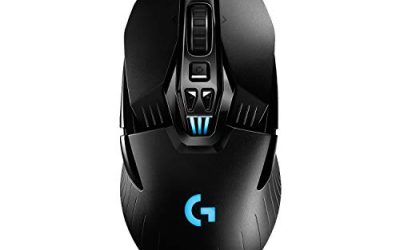
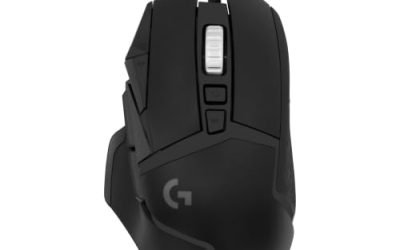
Picking an FPS mouse inside one brand’s catalogue sounds simple until the real decision shows up: Logitech G sells several mice with near-identical sensor numbers, so the choice that actually changes your aim is shape and weight, not the spec sheet headline. A symmetrical shell suits claw and fingertip players who steer with their fingers, while a sculpted right-handed body supports palm players through long sessions. Getting that match wrong costs more rounds than any DPI gap.
This guide is for competitive FPS players who already know they want Logitech G, whether that is for G Hub, LIGHTSPEED wireless, or simple brand trust. Every pick below was chosen from the names and specifications printed on its Amazon product page, and the lineup runs from the lightest esports shells to a wired all-rounder and an AA-powered budget option.
Our Top Picks


Top 3 picks at a glance

Quick Picks
As an Amazon Associate we earn from qualifying purchases.
| Product | Best for | Key spec from title |
|---|---|---|
| Logitech G PRO X Superlight 2 | Competitive players who want the lightest symmetrical option | 60 g with HERO 2 sensor and 8 kHz report rate |
| Logitech G PRO X Superlight 2 DEX | Right-handed players who want an asymmetrical esports shape | 60 g right-handed shape with 44K DPI sensor |
| Logitech G703 LIGHTSPEED | Palm-grip players who want a fuller wireless body | HERO 25K sensor at 95 g plus optional 10 g weight |
| Logitech G502 X Wired | Players who want extra buttons without giving up FPS tracking | HERO 25K sensor with LIGHTFORCE hybrid switches |
| Logitech G305 LIGHTSPEED | Budget FPS players who still want 1 ms wireless | HERO 12K sensor with up to 250 hours on one AA battery |
How to Choose
Start With Shape and Grip, Not the Sensor
Every mouse in this guide tracks well enough for ranked FPS play, so the first filter should be how the shell meets your hand. Symmetrical bodies like the Superlight 2 leave both sides flat, which suits claw and fingertip grips and quick vertical flicks. Sculpted right-handed shapes such as the DEX and G703 fill the palm and support relaxed aim over long sessions. Measure your hand, note your grip honestly, and only then compare sensors, because a perfect sensor in the wrong shape still fights your aim.
Weight Changes How You Aim
A 60 g mouse asks almost nothing from your arm, so micro-corrections and hard stops feel effortless, which is why ultralight shells dominate esports desks. The trade-off is that very light mice can feel twitchy at low sensitivity until you adapt. Heavier options around 89 to 99 g add inertia that smooths tracking for some players and gives the G502 X and G305 a steadier feel. Neither direction is objectively better; match the weight to whether your aim style is flick-heavy or tracking-heavy.
Polling Rate and the Wireless Question
Standard gaming mice report position 1,000 times per second, and the Superlight 2 pair raises that to an 8 kHz report rate for smoother cursor movement on high-refresh monitors. The gain is real but subtle, and it matters most if the rest of your setup is already fast. LIGHTSPEED wireless on the other picks runs a 1 ms report rate that has been the competitive standard for years, so going wireless no longer means accepting a delay penalty in shooters.
Battery System and Day-to-Day Hassle
Rechargeable models like the Superlight 2 and G703 run for days or weeks per charge and top up over USB-C or micro-USB, but they do need cable time eventually. The G305 takes the opposite route with a single AA battery rated for up to 250 hours, so a spare battery in a drawer replaces charging entirely. Think about which routine annoys you less, because a dead mouse before a match is a silly way to lose, and both systems are cheap to live with when planned.
The 5 Best Options
Logitech G PRO X Superlight 2

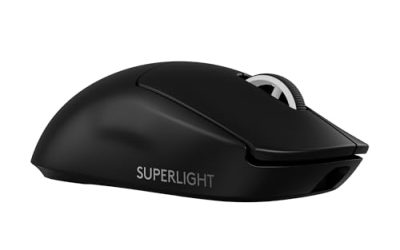
This is the default recommendation for competitive players who use a symmetrical shape. At 60 g with the HERO 2 sensor tracking up to 44,000 DPI and an 8 kHz report rate, it removes weight and latency from the equation so your own consistency is the only variable left. The five programmable buttons keep the layout clean for FPS, and LIGHTFORCE hybrid switches give crisp clicks without the double-click worries of purely mechanical designs.
Specs
- Sensor: HERO 2 optical, up to 44,000 DPI
- Tracking speed: over 888 IPS
- Weight: 60 g
- Report rate: up to 8 kHz
- Switches: LIGHTFORCE hybrid optical-mechanical
- Buttons: 5 programmable
- Battery life: up to 95 hours
- Charging: USB-C, POWERPLAY compatible
Best for: Competitive FPS players who want the lightest symmetrical Logitech G option.
Watch out for: There is no dedicated DPI button on top, so sensitivity changes happen in G Hub or on a bound button.
ASIN: B09NBWL8J5
Logitech G PRO X Superlight 2 DEX
The DEX takes the same flagship internals and reshapes the shell for right-handed players who found the standard Superlight 2 a little flat. The asymmetrical body supports the palm and thumb more deliberately, which many claw and relaxed-claw players prefer for long ranked sessions, while the 60 g weight and HERO 2 sensor keep flicks just as quick. It is the pick for players who want esports hardware that still feels anchored in the hand.
Specs
- Sensor: HERO 2 optical, up to 44,000 DPI
- Weight: 60 g
- Shape: right-handed asymmetrical
- Polling: up to 8 kHz
- Buttons: 5 programmable
- Battery life: up to 95 hours
- Charging: USB-C
Best for: Right-handed claw and palm players who want an ultralight mouse with a shaped body.
Watch out for: The asymmetrical shell is right-hand only, and left-handed players should look at the standard Superlight 2 instead.
ASIN: B0DB5JJTC9
Logitech G703 LIGHTSPEED
The G703 is the comfort-first wireless option in the G lineup, built around a contoured right-handed body that fills the palm instead of disappearing under it. Its HERO 25K sensor tracks up to 25,600 DPI, and at 95 g with an optional 10 g weight it lets you tune how planted the mouse feels. LIGHTSPEED wireless keeps the report rate at 1 ms, and POWERPLAY compatibility means it can charge from a compatible mat while you play.
Specs
- Sensor: HERO 25K optical, 100 to 25,600 DPI
- Weight: 95 g, plus optional 10 g weight
- Buttons: 6 programmable
- Connection: LIGHTSPEED wireless, 1 ms report rate
- Battery life: up to 60 hours with lighting off
- Extras: POWERPLAY compatible, LIGHTSYNC RGB, rubber side grips
Best for: Palm-grip players who want a substantial wireless mouse for FPS and everyday use.
Watch out for: At 95 g it is far heavier than the Superlight models, so fingertip players who flick hard may find it slow to stop.
ASIN: B071S8M8TB
Logitech G502 X Wired

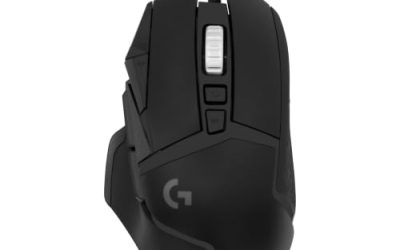
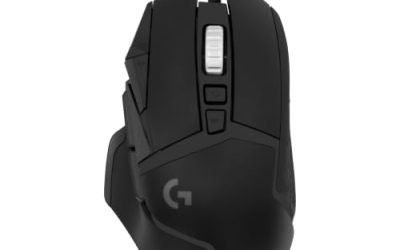
The G502 X proves an FPS mouse does not have to strip everything away. Its HERO 25K sensor and LIGHTFORCE hybrid switches deliver the tracking and click speed shooters need, while 13 programmable controls give you room for push-to-talk, ping, and grenade keys without reaching for the keyboard. At 89 g it sits in the middle on weight, and the wired connection means zero battery management. It suits players who split time between FPS and games that reward extra buttons.
Specs
- Sensor: HERO 25K optical, up to 25,600 DPI
- Switches: LIGHTFORCE hybrid optical-mechanical
- Controls: 13 programmable
- Weight: 89 g
- Connection: wired USB
- Feet: PTFE
Best for: Players who want one mouse for FPS plus button-heavy games, with no battery to manage.
Watch out for: The cable adds drag on wide swipes unless you pair it with a mouse bungee, and the extra buttons are easy to hit by accident at first.
ASIN: B0943HXDVM
Logitech G305 LIGHTSPEED
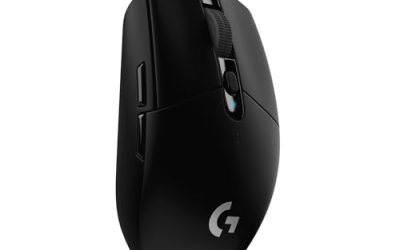
The G305 remains the budget doorway into LIGHTSPEED wireless, and its HERO sensor still tracks at a 1 ms report rate with up to 12,000 DPI, which covers any sane FPS sensitivity. It runs up to 250 hours on a single AA battery and stores its USB receiver inside the body, so it travels well between a desktop and a laptop bag. The compact symmetrical shape favours small to medium hands and claw or fingertip grips.
Specs
- Sensor: HERO optical, 200 to 12,000 DPI
- Weight: 99 g with battery
- Battery: 1 AA, up to 250 hours
- Connection: LIGHTSPEED wireless, 1 ms report rate
- Buttons: 6 programmable
- Storage: built-in receiver compartment
Best for: Budget-conscious FPS players who want proven 1 ms wireless without charging cables.
Watch out for: The small shell can cramp large hands using a palm grip, and the AA battery makes it heavier than its size suggests.
ASIN: B07CMS5Q6P
Which One Fits Your Situation
You Play Ranked FPS Most Nights
Choose the G PRO X Superlight 2. Its 60 g symmetrical shell, HERO 2 sensor, and 8 kHz report rate are built for exactly this routine, and the long battery life means charging rarely interrupts a session. If your grip leans on your palm more than your fingers, take the DEX version for the shaped right-handed body instead.
Your Hand Aches After Long Sessions
Look at the G703 LIGHTSPEED. The contoured body and rubber side grips spread pressure across the palm rather than your fingertips, and the optional 10 g weight lets you slow the mouse down slightly if fatigue makes your aim shaky. It gives up the ultralight feel, but comfort across a full evening is worth more than a few grams.
You Split Time Between Shooters and Everything Else
The G502 X Wired fits a mixed library best. Thirteen programmable controls cover voice chat, abilities, and macros in other genres, while the HERO 25K sensor keeps it honest in FPS matches. Being wired also means it doubles as a dependable desk mouse that never needs a charge before a workday or a match.
You Need a Capable Mouse on a Tight Budget
Start with the G305 LIGHTSPEED. It keeps the two things that matter for shooters, a reliable HERO sensor and 1 ms LIGHTSPEED wireless, and drops the extras that push prices up. The AA battery system is genuinely convenient, and the money saved goes further spent on a good mousepad, which your aim will notice more.
Common Mistakes
- Buying the highest DPI number on the box when most FPS players use a small fraction of the range, while shape and weight go unconsidered.
- Picking an ultralight mouse for a relaxed palm grip, then blaming the sensor when the real problem is a shell that never fills the hand.
- Assuming wireless still means lag, and ruling out LIGHTSPEED models that report as fast as wired ones.
- Forgetting that 8 kHz polling only helps if your monitor refresh rate and in-game settings can keep up with it.
- Ignoring the battery system, then discovering mid-match that a rechargeable mouse needed its cable an hour ago.
Frequently Asked Questions
Is wireless really fast enough for competitive FPS now?
Yes, on Logitech’s LIGHTSPEED connection the report rate is 1 ms, the same figure wired gaming mice have used for years, and the Superlight 2 models go further with an 8 kHz report rate. In practice the connection is no longer the weak link in the chain; your monitor, in-game settings, and consistency matter far more to how shots register.
Which Logitech G mouse do most FPS players choose?
The G PRO X Superlight line is the common competitive pick because it pairs a safe symmetrical shape with a 60 g weight and a flagship sensor. The standard Superlight 2 suits claw and fingertip grips, while the DEX version reshapes the same hardware for right-handed players who want more palm support. Players with larger hands or a palm grip often land on the G703 instead.
Does a higher polling rate change how a mouse feels?
An 8 kHz report rate sends position updates eight times more often than the standard 1 kHz, which can make cursor movement look smoother on high-refresh monitors and shave a fraction of input delay. The difference is subtle rather than transformative, and it shows up most in slow, precise tracking. It is a finishing touch on an already fast setup, not a substitute for the right shape.
Should I pick the G305 or save for the Superlight 2?
Pick the G305 if the budget is firm: its HERO sensor and 1 ms wireless are genuinely competitive, and the 250-hour AA battery is the lowest-maintenance system here. Save for the Superlight 2 if you play daily and want the 60 g shell, rechargeable battery, and higher polling ceiling. The honest gap between them is feel and weight, not whether your shots land.
Related guides
More from Amazon
Programs that pair well with the guide above. Offers and eligibility are set by Amazon and may change.
Free shipping on eligible items, Prime Video and more. Eligible new members can start with a free trial.
Start a Prime free trialAd-free music streaming. Eligible new subscribers can start with a free trial.
Try Music Unlimited freeA Prime membership for ages 18-24 with a trial period. Eligibility is set by Amazon.
See Prime for Young AdultsAudiobooks and podcasts to listen to on the go. Eligible new members can start with a free trial.
Try Audible freeAs an Amazon Associate we earn from qualifying purchases.