Shopping for a camera under 200 dollars is mostly an exercise in choosing which weakness you can live with. At this level, nobody gets a large sensor and a long zoom and fast autofocus together. You pick a compact point-and-shoot that slips into a jacket pocket, a bridge-style camera with a huge zoom range, or one of the feature-packed vlogging cameras that promise high megapixel counts and flip screens. Each approach has a clear use case, and most disappointment comes from buying the wrong one for the job.
This guide is for people who want a dedicated camera for vacations, school events, a teenager’s first real camera, or casual vlogging, and who do not want to spend more than the cap. Going into 2026, the listings are dominated by Kodak PIXPRO models in two flavors (small compacts and long-zoom bridge cameras), one renewed Canon PowerShot superzoom, and two generic feature-heavy cameras with big numbers in the title. The sections below show how to read those numbers and what to ignore.
Our Top Picks

Top 3 picks at a glance
Quick Picks
As an Amazon Associate we earn from qualifying purchases at no extra cost to you.




| Product | Best for | Key spec from the title |
|---|---|---|
| KODAK PIXPRO AZ255 | Balanced travel zoom | 16MP, 25x optical zoom, OIS, AA batteries |
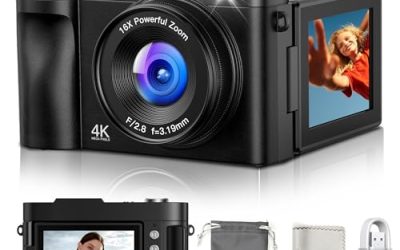
| 4K 56MP Point and Shoot | Beginners and social posting | 4K, 3-inch 180-degree flip screen, 16X zoom |
| KODAK PIXPRO FZ45 | Pocketable first camera | 16MP, 4X optical zoom, 27mm wide lens |
| KODAK PIXPRO AZ528 | Maximum zoom with Wi-Fi | 52x optical zoom, Wi-Fi, OIS |
| KODAK PIXPRO AZ405 | Bridge camera with higher resolution | 20MP, 40x optical zoom, OIS |
| Canon PowerShot SX420 IS (Renewed) | Brand-name long zoom | 42x optical zoom, renewed |
| KODAK PIXPRO FZ55 | Simple vlog-style compact | 16MP, 5X optical zoom, 28mm wide lens |
| 64MP Dual Lens Vlogging Camera | Entry vlogging with card included | Dual lens, 64MP, 32GB card |
How to Choose
Optical zoom is the number that matters
Titles in this price band throw around big numbers, but only optical zoom changes what the lens can actually see. The Kodak and Canon models here list 4X, 5X, 25x, 40x, 42x, and 52x optical zoom. A 4X or 5X lens is plenty for family portraits and indoor shots, while 25x and up is for distant subjects like animals, stage performers, or sports. A 16X zoom on a generic camera may be partly digital, so look for the word “optical” and treat anything else with caution.
Wide angle and screen size
A wide lens is valuable when you are shooting in a crowded room or at a landmark. Listings mention 24mm, 27mm, and 28mm wide-angle lenses, and the smaller the number the wider the view. Screens run from 2.7 to 3 inches, and the flip-up or 180-degree type is a real advantage for selfies and vlogs. Do not expect any camera in this range to have an electronic viewfinder; you will frame everything on the rear screen.
Power, storage, and connectivity
Several Kodak models use AA batteries, which is a quiet convenience for travel: you can buy replacements almost anywhere. Others use built-in rechargeable packs. Check whether a memory card is included, since only the generic vlogging camera mentions a 32GB card. If you want to send shots straight to a phone, the AZ528 lists Wi-Fi; the others in this group do not mention it in the title, so assume a card reader is needed.
Megapixels, “8K” claims, and what to ignore
Megapixel counts of 16MP and 20MP are more than adequate for prints and screens. Numbers such as 56MP, 64MP, and 8K in the generic listings reflect interpolation or marketing more than a real jump in quality, because the sensors at this price are small. Image stabilization, lens quality, and sensor size matter more. Where budget cameras cut corners is in low-light performance, autofocus speed, and video bitrates, so use them in good light for the best results. If a listing leaves out a spec you care about, such as stabilization or wireless transfer, assume it is absent rather than hidden. It also helps to decide your top two priorities, for example reach and a flip screen, and let everything else break the tie, because no camera in this group wins on every line of the spec sheet.
The 8 Best Options
KODAK PIXPRO AZ255
The AZ255 is the middle-of-the-road travel camera: 16MP, a 25x optical zoom, optical image stabilization, a 24mm wide-angle lens, a 3-inch LCD, and 1080p Full HD video, all running on AA batteries. It fits vacationers who want one lens for scenery and distant details.
- Strength: wide 24mm start with 25x optical zoom covers most travel situations.
- Strength: AA batteries are easy to replace anywhere.
- Trade-off: the title does not list wireless transfer, so photos move by card.
Skip it if you want a camera that slips into a small pocket or sends images to your phone.
4K 56MP Point and Shoot
This generic camera leans on features: 4K video, a 56MP figure, autofocus, a 3-inch 180-degree flip screen, and 16X zoom, pitched at beginners and travel photographers. It is for buyers who care about a selfie-friendly screen and a modern spec list over a known brand name.
- Strength: a flip screen makes selfies and self-framed vlogs simple.
- Strength: 4K video is listed on a compact body.
- Trade-off: the 56MP and 16X numbers may include digital processing, and the brand has less track record than Kodak or Canon.
Skip it if you want a recognized brand or true optical zoom clarity.
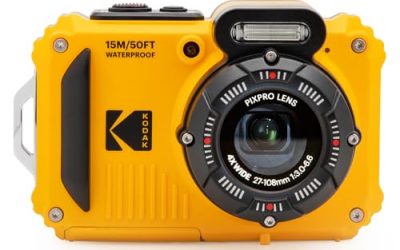
KODAK PIXPRO FZ45
The FZ45 is the small and simple option: 16MP, 4X optical zoom, a 27mm wide-angle lens, a 2.7-inch LCD, 1080p video, and AA batteries. It suits kids, grandparents, and anyone who wants to point, shoot, and move on.
- Strength: compact design and straightforward controls.
- Strength: AA batteries make power easy to manage.
- Trade-off: only 4X optical zoom, so it cannot reach distant subjects.
Skip it if you shoot sports, wildlife, or stage events from the back row.
KODAK PIXPRO AZ528
The AZ528 stretches the formula to 52x optical zoom with Wi-Fi, 16MP, a 24mm wide lens, a 3-inch LCD, optical image stabilization, and 1080p video. It is the choice for people who want maximum reach and easy phone transfers.
- Strength: the longest optical zoom in the group, plus stabilization.
- Strength: Wi-Fi is listed for sharing photos.
- Trade-off: the larger zoom body is heavier than a pocket compact, and extreme zoom is hard to keep steady.
Skip it if you want a camera that disappears in a coat pocket.
KODAK PIXPRO AZ405
This bridge camera steps up the sensor to 20MP and offers a 40x optical zoom, OIS, a 24mm wide lens, a 3-inch LCD, and AA batteries, with scene modes mentioned in the title. It suits users who want more resolution than the 16MP models without jumping to a different camera category.
- Strength: 20MP resolution paired with a 40x optical zoom.
- Strength: optical stabilization helps at long focal lengths.
- Trade-off: the title does not list Wi-Fi, so image transfer is by card.
Skip it if wireless sharing is important to you.
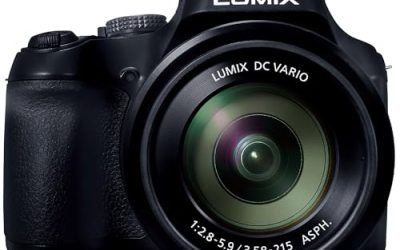
Canon PowerShot SX420 IS (Renewed)
The SX420 is a Canon superzoom with a 42x optical zoom, sold here as renewed. It is aimed at buyers who prefer a known brand and want serious reach for school sports, concerts, or backyard birds.
- Strength: 42x optical zoom from a major camera maker.
- Strength: renewed units can leave room in the budget for a card and case.
- Trade-off: the title gives few other specs, and renewed condition and warranty depend on the seller.
Skip it if you want guaranteed new condition or a full spec rundown in the listing.
KODAK PIXPRO FZ55
The FZ55 is a small point-and-shoot with 16MP, 5X optical zoom, a 28mm wide-angle lens, a 2.7-inch LCD, and 1080p video, with vlogging mentioned in the title. It is a gentle step up from the FZ45 for people who want slightly more zoom.
- Strength: compact body with simple operation.
- Strength: 5X optical zoom is handy for casual portraits and events.
- Trade-off: the 28mm lens is not as wide as the 24mm bridge models, and the screen does not flip.
Skip it if you need to frame yourself on camera or want long reach.
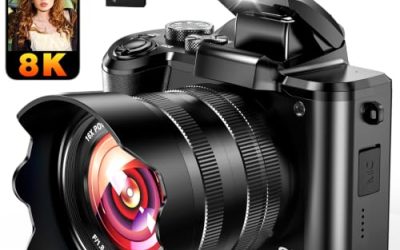
64MP Dual Lens Vlogging Camera
The final listing is a dual-lens vlogging camera with a 64MP figure, 8K in the title, and a 32GB card included. It targets beginners who want a front-and-rear framing option and a card in the box.
- Strength: a dual-lens layout makes self-recording straightforward.
- Strength: the included 32GB card means you can start immediately.
- Trade-off: the title says little about optical zoom, and the 8K and 64MP claims should be treated cautiously on a small sensor.
Skip it if you care about proven image quality or want a recognized brand.
Which One Fits Your Situation
You are heading on a long trip
The KODAK PIXPRO AZ255 handles landscapes and distant details, and the AA batteries remove charging worries. If you also want Wi-Fi sharing from the road, the AZ528 is the better match.
You need a camera a child can carry
The KODAK PIXPRO FZ45 or FZ55 is small and simple, and both run on straightforward controls and 1080p video.
You photograph sports or wildlife
The KODAK PIXPRO AZ405 offers 20MP and 40x optical zoom, while the Canon PowerShot SX420 IS gives you 42x from a brand-name maker.
You want to make casual videos of yourself
The 4K 56MP Point and Shoot offers a flip screen, and the 64MP Dual Lens Vlogging Camera includes a card. Treat the big megapixel claims as marketing and judge them by clips in good light.
Common Mistakes
- Mixing up optical and digital zoom and buying for the wrong number.
- Choosing a huge zoom camera and then shooting mostly indoors in dim light.
- Believing 8K or 64MP in a title means pro-level detail on a tiny sensor.
- Forgetting that a card is often not included, and a slow card can hamper video.
- Skipping spare AA batteries or a charger for a long day of shooting.
Related guides
- Gaming Laptop Battery Draining While Plugged In Fix
- How To Stop Laptop Thermal Throttling In Software
- Gaming Laptop For High School Students
Frequently Asked Questions
Is a bridge camera better than a compact?
A bridge camera offers much more zoom range, but it is larger. A compact is easier to carry and is enough for everyday shots, so match the choice to your subjects.
Why do some cameras use AA batteries?
AA batteries are easy to find and swap, which is helpful when traveling. The downside is that alkaline cells do not last as long as a good rechargeable pack, so carry spares.
Will a camera under 200 dollars beat my phone?
For zoom, yes: a phone cannot match a 25x to 52x optical lens. For low light and quick processing, a recent phone often does better, so a dedicated camera is mainly about reach and handling.
Do I need Wi-Fi?
It is a convenience, not a necessity. Without it, you will transfer photos using a card reader or cable, which works fine if you do not share often.