In a small form factor build, the cooler is chosen by a ruler before it is chosen by a performance chart. Every case has a hard ceiling for CPU cooler height, measured in millimeters, and a cooler that is a few millimeters too tall simply does not let the side panel close. That single number sorts the field faster than any performance chart: slim cases want coolers in the range of 36mm to 65mm, compact towers allow taller air coolers, and the choice then shifts to noise, memory clearance and how much heat the processor actually produces.
This guide ranks seven coolers from the listings by what their titles state, covering two true low-profile units, a micro-sized Noctua, a stock-style AMD slim cooler, an older Intel-socket Cooler Master, and two compact towers for roomier small cases. A Cooler Master prebuilt PC and a 360mm liquid cooler also appeared in the results and were left out, because neither fits the idea of a cooler for a small case. Read the height and socket details first, then the TDP figures, and only then think about noise as you plan your 2026 build.
Our Top Picks
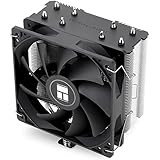
 Thermalright AXP90 X36 Low Profile ITX CPU CoolerHeight 36mm3.74 x 3.7 x 0.83 inches0.9 poundsCheck on Amazon


Top 3 picks at a glance
Quick Picks
As an Amazon Associate we earn from qualifying purchases at no extra cost to you.



| Product | Best for | Key spec from the title |
|---|---|---|
| Thermalright AXP90 X36 | Ultra-slim ITX cases | 36mm height, TL-9015 slim PWM fan |
| be quiet! Pure Rock Low Profile | Quiet low-profile builds | 100W TDP, 3 heatpipes of 6mm |
| Thermalright Assassin X120 Refined SE | Compact towers on a budget | 4 heat pipes, TL-C12C PWM fan, AM4/AM5 |
| be quiet! Pure Rock Pro 3 Black | Hotter chips in roomier small cases | 250W TDP, double tower, 2 PWM fans |
| AMD Wraith Stealth | Stock replacement on AM4 | Socket AM4, slim, 3.93-inch fan |
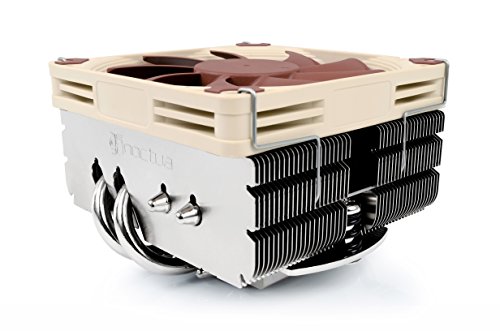
| Noctua NH-L9x65 | Low noise in ITX | 65mm height, 92mm slim fan |
| Cooler Master i30 | Older Intel LGA 115x boards | 92mm fan, LGA 1150/1151/1155/1156 |
The 7 Best Options
Thermalright AXP90 X36 (36mm Low Profile)
The AXP90 X36 is the answer when the case allows almost no vertical space. The title gives its height as 36mm and pairs the heatsink with a TL-9015 slim PWM fan, describing it as an ITX heatsink cooler for AMD AM4 and AM5 and Intel LGA1150 and other LGA sockets, with the full list cut off in the listing. A 36mm cooler is the sort of part chosen for slim desktops and thin ITX cases where taller units cannot be installed at all. In a living-room box or a shelf-sized office machine, that kind of cooler is often the difference between a build that closes properly and one that needs a different case.
- The 36mm height fits cases where even a 65mm cooler would be too tall.
- A slim PWM fan allows speed control from the motherboard header.
- Support for both AM4 and AM5 covers two generations of AMD boards.
- A cooler this thin has limited surface area, so it suits modest processors rather than hot, high-wattage chips.
- The title gives no TDP rating, so heat capacity must be judged by the type of chip you pair with it.
Skip it if your case allows more height; a taller cooler will always cool better and run quieter. Compared with the be quiet! Pure Rock Low Profile that follows, the AXP90 is slimmer but states no heat rating, whereas the be quiet! unit tells you its limit. If you pick the AXP90, pair it with an efficient, modest-wattage processor and make sure the case has an intake path, because a thin heatsink leans heavily on the airflow around it.
Think of it as a specialist tool rather than a general upgrade. Builders who choose a 36mm cooler usually do so because the chassis leaves no alternative, and the fan size, speed curve and case ventilation then decide how comfortable the temperatures are. Setting a gentle fan curve in the motherboard firmware is the sensible first step after installation.
be quiet! Pure Rock Low Profile (100W TDP)
This one speaks plainly about its limits, which is rare in the cooler aisle. The title lists a 100W TDP, three high-performance heatpipes of 6mm, support for AMD and Intel and a compact design aimed at small form factor systems. That makes it easy to match against a processor: if the chip’s rated power is comfortably under 100 watts, the cooler is a sensible fit, and the title’s compact, small-form-factor framing shows where the maker aims it.
- A stated 100W TDP gives a clear ceiling for pairing with a processor.
- Three 6mm heatpipes move heat from the base into the fins efficiently for a low-profile design.
- Compatibility with both AMD and Intel sockets keeps the cooler useful across platform changes.
- The title does not give an exact height, so check the maker’s specification against your case.
- A 100W ceiling rules out the hottest unlocked processors under sustained load.
Skip it if you plan to overclock or to run a high-core-count chip flat out. Next to the Thermalright Assassin X120, it sacrifices cooling capacity for a smaller footprint, which is exactly the trade a small case demands. Buyers with a mainstream six-core or eight-core processor that sits at a moderate rated power should find the 100W figure a clear guide, while owners of higher-wattage chips are better served further down the list.
Because the 100W figure comes from the maker and not from this guide, read it as an upper bound for typical use rather than a promise for every workload. A processor that sits well below the number will run quieter, and a processor close to it will keep the fan audible.
Thermalright Assassin X120 Refined SE
The Assassin X120 steps up in size and thermal capacity. The title lists four heat pipes, a TL-C12C PWM fan, an aluminum heatsink cover and AGHP technology, with support for AMD AM4 and AM5 and several Intel sockets. This is a compact tower rather than a low-profile unit, so it belongs in small cases that still have room for a 120mm-class cooler, such as some micro-ATX and larger mini-ITX designs.
- Four heat pipes give more heat transfer than the three-pipe low-profile coolers.
- A PWM fan lets the motherboard control speed and noise.
- AM4 and AM5 support covers two AMD socket generations.
- As a tower design it needs far more clearance than the true low-profile coolers.
- The title gives no TDP rating, so treat it as a mid-range tower, not a flagship cooler.
Skip it if your case limit is below tower height, which most slim ITX cases are. Compared with the be quiet! Pure Rock Pro 3, it is the simpler choice and the Pure Rock Pro 3 is the one that states a much higher TDP ceiling. The Assassin is the sort of cooler you choose when the case manual allows a conventional 120mm tower and the build is tight on budget, since a compact tower gives a large step up in cooling over any low-profile part.
This is the type of cooler small-case gamers pick when a sealed, compact build has to cope with a long evening session. The aluminum cover in the title is a styling and rigidity detail, and the real value sits in the heat pipes and fan control. Keep an eye on the fit with the front of the case, since a tower this size changes how the whole interior is laid out.
be quiet! Pure Rock Pro 3 Black
For small builds that can accommodate it, this is the heavyweight of the list. The title describes a 250W TDP, a double-tower compact design, two silent 120mm PWM fans and six high-performance 6mm heatpipes, in a black finish, for AMD and Intel. A 250W rating suggests ample headroom for warm processors, and the pair of fans lets them run slowly while still moving air.
- A 250W TDP rating is the highest of the seven, leaving room for demanding processors.
- Two 120mm PWM fans spread the airflow and can run at lower speeds.
- Six heatpipes of 6mm suggest strong heat transport away from the processor.
- A double-tower cooler is wide and tall, so it often exceeds the limits of small cases.
- Two fans and a large heatsink may crowd memory slots, so verify RAM clearance.
Skip it if your case lists a cooler height limit under about 160mm or if you need ITX clearance. Next to the AMD Wraith Stealth, which follows, it sits at the opposite end of the list: as much cooling capacity as a compact build allows versus the smallest stock-style option. It is an especially good match for a micro-ATX gaming case with decent ventilation, where the fans can idle quietly at light loads and ramp only when a game demands it.
The double-tower layout also means the fans sit between and beside the fin stacks, so their placement affects how close the cooler sits to the RAM and the rear exhaust. Plan the installation order: memory first if clearance is tight, or cooler first if the fan clips must be moved. Careful placement here avoids many frustrating rebuilds.
AMD Wraith Stealth (Socket AM4)
The Wraith Stealth is the plain, familiar slim cooler shipped with many entry-level AMD processors, here listed as a standalone part. The title says it fits Socket AM4, uses a 4-pin connector, has an aluminum heatsink and a 3.93-inch fan, and calls it slim. It is not aimed at enthusiasts, but it is a useful spare for a budget AM4 build or a replacement for a lost stock cooler.
- Designed for Socket AM4, so mounting is straightforward on supported boards.
- A 4-pin connector allows PWM fan control.
- The slim form leaves clearance in small cases.
- Only AM4 is listed, so it will not fit AM5 or Intel boards.
- An aluminum heatsink and small fan limit cooling capacity compared with heatpipe coolers.
Skip it if you use a hot processor or any socket other than AM4. Compared with the Noctua NH-L9x65 next on the list, it costs far less in effort and clearance but offers much less cooling performance and noise control. A budget AM4 office build with a lower-power chip is where it makes sense, and a gamer with a hot processor should pass.
In practice it is a part for the low-power corner of the AM4 range: office builds, media boxes and entry-level systems. If your processor shipped with this style of cooler, it will behave as it did before, with an audible fan under load but dependable fit. Upgrading to a heatpipe cooler is the natural next step when temperatures or noise become a nuisance.
Noctua NH-L9x65
The NH-L9x65 is a well-known name in small builds. The title calls it a quiet high-performance low-profile CPU cooler with a 65mm height, built for ITX and small form factor cases, supporting Intel and AMD with a 92mm slim fan. The 65mm figure sits above the 36mm class but still below standard towers, giving it a balanced place between slim and compact.
- A stated 65mm height is a clear number to compare with your case limit.
- A 92mm slim fan is larger than the fans on the thinnest coolers, which helps airflow at lower speeds.
- Support for Intel and AMD makes it a flexible choice across platforms.
- It is taller than the 36mm AXP90, so it will not fit the slimmest cases.
- The title does not state a TDP, so match it to modest processors.
Skip it if you need to cool a hot, high-wattage processor, since a low-profile cooler has limits. In comparison with the Cooler Master i30 that follows, it is far more modern and broadly compatible, because the i30 supports only older Intel sockets. Where space allows, the Noctua is the more future-proof purchase, since a cooler that survives a platform change saves buying a second one.
Where it earns its reputation is in builds that prize quiet running over peak output, such as home theater PCs and compact workstations. The 65mm figure is the dimension that decides whether it fits, so compare it with the case clearance, and do not forget the height of the memory modules that sit beside the socket.
Cooler Master i30
The i30 is a niche option for older systems. The title lists a 92mm low-noise fan with a heatsink and support for Intel sockets LGA 1150, 1151, 1155 and 1156, with no mention of any AMD socket. That makes it a replacement choice for an aging Intel build rather than a pick for a new small PC.
- Support for four older Intel sockets suits legacy boards.
- A 92mm fan offers a moderate size for quiet operation.
- A compact heatsink fits many small cases.
- It does not list support for current Intel or AMD sockets, so it cannot go on a new board.
- No TDP is given, so keep it for low-power chips.
Skip it for any new build. It is the right part only when an older LGA 115x system needs a quiet replacement cooler, and it is the least future-proof pick on this list. If you are rescuing a family computer from a failing fan, it can be the quickest fix, provided you confirm the socket by reading the processor name in system information first.
Replacement jobs on aging Intel boards add one more caveat: even a socket match does not mean the old backplate and screws are interchangeable, so inspect the mounting kit before dismantling the old cooler.
Because it covers only four older sockets, the quickest way to confirm a match is to read the motherboard model, find its socket in the manual and compare it with the list in the title before ordering.
Who Needs a Dedicated Small Form Factor Cooler
Standard coolers assume space. A small case removes that assumption, so the part that fits is often the part you must buy, even when a bigger cooler would perform better in a larger tower. The decision is usually forced by the case, not by preference.
Compact builds change which risks matter. In a standard tower, the biggest risk is overpaying for cooling you do not need; in a small case, the biggest risk is buying a cooler that cannot be installed, or that traps heat. Fit, airflow and the processor’s rated power are the three factors that drive the choice.
ITX Builders With a Strict Height Limit
If your case manual lists a cooler height in the range of roughly 36mm to 65mm, the AXP90 X36 and NH-L9x65 are the two entries that state heights in their titles. Everything else needs more room. Measure from the motherboard socket to the inside of the side panel, because the case’s printed limit assumes the stock bracket layout.
Owners of Compact Towers and Micro-ATX Cases
These cases often allow a 120mm-class tower. The Assassin X120 and Pure Rock Pro 3 sit in this group, and they provide far more cooling capacity than slim coolers. Even so, the printed height limit and the RAM clearance still need to be checked on paper before the order goes in.
Upgraders and Repairers
A lost stock cooler or an old office PC calls for a simple, socket-matched replacement. The Wraith Stealth for AM4 and the Cooler Master i30 for LGA 115x are straightforward answers for those jobs. They cost little effort, and they keep an older machine running without a full rebuild.
How to Choose a CPU Cooler for a Small Form Factor PC
Cooler Height Versus Case Limit
Find the maximum CPU cooler height in your case specification and subtract a few millimeters for margin. Low-profile units run from about 36mm to 65mm, compact towers are far taller. Measure twice and trust the case maker’s number over a guess. A cooler that fits by less than 3mm is risky once fans, backplates and cables are counted.
Matching TDP to Your Processor
Choose a cooler whose stated TDP meets or exceeds the processor’s rated power, with margin for sustained load. The Pure Rock Low Profile at 100W suits 65W-class chips, while the Pure Rock Pro 3 at 250W handles far hotter ones. If a title gives no TDP, assume modest capability. Remember that boost behavior can push a processor beyond its base rating, so leave at least twenty percent of headroom for sustained work such as rendering or long gaming sessions.
Socket Support
List the exact socket on your board, such as AM4, AM5 or LGA 1700, and confirm that it is named. The Wraith Stealth is AM4 only, and the i30 covers only older Intel sockets. Mounting kits matter as much as the heatsink, and AM5 and AM4 share a similar hole pattern, which is why several of the Thermalright and be quiet! coolers name both.
Fan Size, PWM Control and Noise
Larger fans move more air at lower speeds, which reduces noise. Look for a 4-pin PWM fan so the motherboard can vary speed. A 92mm slim fan is typical in low-profile units, while 120mm fans appear on the compact towers. Noise comes from fan speed more than size alone, so a larger fan at lower revolutions is the quieter path whenever the case allows it.
Memory and PCIe Clearance
Tall memory modules and large heatsinks can collide. Confirm the distance from the socket to the first memory slot, and the distance to the top of the graphics card slot, before ordering a tower cooler. Low-profile units are safer around tall RAM. If you use memory with tall heat spreaders, measure the gap or choose a low-profile kit.
Airflow, Case Ventilation and Where Budget Coolers Cut Corners
A cooler is only as good as the air it receives. Without an intake fan or vented panel, even a strong cooler struggles. Budget models often skimp on mounting hardware, thermal paste quality and fan bearing life. What to ignore is decorative lighting; cooling capacity and fit matter more than appearance. Also ignore cosmetic claims about fin finish; heatpipe count, fan control and verified socket support are the facts that count.
Low-Profile Cooler vs Compact Tower Cooler
The real choice for most small builds is between a flat low-profile unit and a taller compact tower. The table shows how the entries compare on the points the titles state.
| Factor | Low-Profile | Compact Tower |
|---|---|---|
| Examples | AXP90 X36, NH-L9x65, Pure Rock Low Profile | Assassin X120, Pure Rock Pro 3 |
| Height | 36mm to 65mm class | Much taller |
| Cooling capacity | Modest, up to 100W stated | Higher, up to 250W stated |
| Memory clearance | Generally safe | Must be checked |
| Noise | Small fans spin faster | Larger fans run slower |
Noise is the hidden cost in the low-profile column. Small fans have to spin faster to push the same air, so a slim cooler under load is often more audible than a tower running slowly. The upside is less weight on the motherboard and easier shipping.
When Low-Profile Is the Only Choice
If the case height limit is under about 70mm, a tower is not an option. A low-profile cooler paired with a 65W-class processor is the most reliable combination in such a case.
When a Compact Tower Pays Off
If the case has room, a tower cooler adds cooling headroom and lets the fan run slower and quieter. The Pure Rock Pro 3 with its 250W rating is the choice for warm processors in roomier small cases.
Weight is another small difference. A compact tower puts more mass on the socket area, so mount the machine upright and avoid shipping it assembled when possible. Low-profile coolers are lighter and travel better in LAN party bags.
Setup, Compatibility and Upgrade Tips
What to Check Before You Buy
Write down three numbers: your case’s cooler height limit, your motherboard’s socket, and your processor’s rated power. Compare each to the title and the maker’s specification. Check the fan connector type, since 4-pin PWM is common but not universal. Also check how many fan headers your small board provides, because a cooler with two fans may need a splitter.
What to Upgrade First
Replacing the stock cooler is usually the first and most noticeable upgrade. After that, improve case airflow with an intake or exhaust fan, and refresh the thermal paste if the machine is old. Tidy cable routing is a free upgrade in a small case, since loose cables block the very airflow the cooler depends on.
Common Compatibility Traps
Backplates, mounting brackets and motherboard heatsinks can block some coolers. Tall memory kits collide with towers. Some AM5 and Intel brackets differ between generations, so make sure the exact socket is listed. When in doubt, ask the maker for the mounting kit details. Finally, lift the motherboard out of the case if the cooler needs a backplate, and always fit the cooler before the graphics card so there is room for the screwdriver.
Which One Fits Your Situation
A Thin ITX Case With Almost No Headroom
The Thermalright AXP90 X36 at 36mm is the only entry that fits the thinnest cases. Pair it with a modest processor and a case that has an intake fan.
A Quiet Home Theater PC
The Noctua NH-L9x65 with its 92mm slim fan and 65mm height gives a balance of fit and low noise. The slim fan can idle quietly while a media box sits in a cabinet.
A Compact Gaming Build With a Warm Processor
The be quiet! Pure Rock Pro 3 Black, at 250W TDP, offers headroom if the case allows its width and height. Measure memory clearance first, then enjoy the lower fan speeds.
A Budget AM4 Rebuild
The AMD Wraith Stealth is the simple, socket-matched part for a basic replacement. It keeps an AM4 office machine alive without a rebuild.
Common Mistakes
- Buying a cooler before measuring the case height limit.
- Ignoring the cooler’s TDP when pairing it with a hot processor.
- Assuming every cooler supports AM5 or current Intel sockets.
- Forgetting to check memory clearance on tower coolers.
- Choosing a slim cooler for an overclocked chip.
- Skipping case airflow and expecting the cooler to do everything.
Related guides
- Gaming Laptop Battery Draining While Plugged In Fix
- Graphics Cards For Low Wattage Power Supplies
- How To Stop Laptop Thermal Throttling In Software
Frequently Asked Questions
What height do I need for a mini-ITX case?
It depends on the case, so read the maximum CPU cooler height in its specification. Slim cases need coolers like the 36mm AXP90, while larger ITX cases can take the 65mm Noctua. Always compare the case limit with the cooler height before you buy.
Is a low-profile cooler enough for gaming?
For processors in the 65W class, often yes. For hotter chips, a taller cooler such as the Pure Rock Pro 3 is safer if the case has room. Airflow into the case matters as much as the cooler itself.
Do these coolers include thermal paste?
The titles do not say, so check the full listing. Having a tube of paste on hand is wise either way.
Will the AMD Wraith Stealth fit AM5?
No, the title lists Socket AM4 only. For AM5, choose a cooler whose title names AM5, such as the Thermalright coolers. Always read the socket list in the listing before ordering.
Why does TDP matter?
TDP is the maker’s stated thermal ceiling, so a cooler with a rating below your processor’s power will run hot. The be quiet! coolers list their ratings at 100W and 250W.
Can I use the Cooler Master i30 on a new board?
Not on current sockets. The title lists LGA 1150, 1151, 1155 and 1156 only, so it suits older Intel systems.
Final Words
A small form factor cooler is a fit problem first and a performance problem second. Measure the case, note the socket, and match the processor’s power to the cooler’s rating. For ultra-slim cases the AXP90 X36 is the narrowest option, the Noctua NH-L9x65 and be quiet! Pure Rock Low Profile balance size and noise, and the Pure Rock Pro 3 gives headroom where space allows. Choose the one that fits your numbers, and your small build will stay cool and quiet.