
The MSI Katana 15 HX with the RTX 5050 and i7-14650HX at $1,499 is the strongest overall value in MSI’s current lineup for buyers who don’t need premium display technology, delivering 32GB of RAM and a current-generation CPU at a price well below MSI’s Vector and Crosshair tiers. MSI structures its gaming laptop catalog across four distinct lines — Katana for value, Vector and Crosshair for performance-focused mid-to-high tiers, and Stealth for thin-and-light flagship builds — and this roundup spans all four to identify where the real value and genuine performance differences sit.
Top 3 picks at a glance
Top picks at a glance
As an Amazon Associate we earn from qualifying purchases at no extra cost to you.
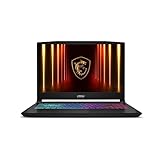


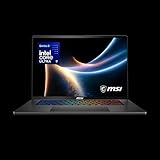


| Model | Key spec | Price | Best for |
|---|---|---|---|
| MSI Thin 15 | i7-13620H, RTX 4050, 16GB DDR4, 144Hz | $960 | Absolute budget entry |
| Katana 15 HX (RTX 5050) | i7-14650HX, RTX 5050, 32GB DDR5 | $1,499 | Best overall value |
| Vector 16 HX AI | Ultra 7-255HX, RTX 5070Ti, 16GB DDR5, Thunderbolt 5 | $1,684.99 | Compact 16″ flagship GPU |
| Katana 15 HX (RTX 5070) | i9-14900HX, RTX 5070, 32GB DDR5, QHD+ 165Hz | $1,869.99 | Strong CPU/GPU balance |
| Crosshair 18 HX AI (v1) | Ultra 9 275HX, RTX 5070 8GB, 32GB RAM, 240Hz | $1,958 | Compare directly against v2 below |
| Crosshair 18 HX AI (v2) | Ultra 9 275HX, RTX 5070, 32GB DDR5, Thunderbolt | $1,999 | Compare directly against v1 above |
| Vector A18 HX | Ryzen 9 9955HX, RTX 5080, 32GB DDR5, 240Hz | $2,699.99 | Strongest GPU tier in this roundup |
| Stealth 16 AI+ | Ultra 9 386H, RTX 5070Ti, 32GB DDR5, 240Hz OLED | $3,099.99 | Thin-and-light flagship with OLED |
MSI Thin 15, Intel i7-13620H / RTX 4050, $960
This is MSI’s most affordable current gaming laptop, pairing a previous-generation i7-13620H with an RTX 4050, 16GB of DDR4 RAM (not DDR5), and a 144Hz FHD display — the “Thin” naming signals MSI’s lightweight, budget-focused chassis design rather than the more performance-oriented lines covered later in this roundup.
DDR4 rather than DDR5 here is a notable platform detail, reflecting this laptop’s slightly older overall design generation compared to every other listing in this roundup, though DDR4’s practical gaming performance impact remains modest as discussed in our motherboard roundups.
Estimated performance based on the RTX 4050’s known class: 70-85 fps at 1080p high in most current titles, solid performance for the price tier though a step behind the current-generation RTX 5050 found on MSI’s Katana 15 HX covered next.
WiFi 6E rounds out a reasonably modern connectivity package despite the laptop’s budget positioning, and the thin chassis design prioritizes portability over the more aggressive cooling engineering found on MSI’s Vector and Crosshair lines.
- Pros
- Lowest price in MSI’s current lineup
- Reasonably thin, portable chassis design
- WiFi 6E despite the budget positioning
- Cons
- DDR4 RAM rather than DDR5
- Previous-generation RTX 4050 GPU
- Thin chassis likely means more conservative cooling than performance-focused lines
Who it’s for: budget buyers who prioritize portability and the lowest possible price over current-generation GPU performance.
MSI Katana 15 HX, RTX 5050 / i7-14650HX, $1,499
This is the strongest overall value in MSI’s current lineup, pairing a current-generation i7-14650HX with an RTX 5050 and a genuinely generous 32GB of DDR5 RAM — double or more the RAM capacity of several pricier competing listings across our other laptop brand roundups.
Estimated performance based on the RTX 5050’s known class: 75-90 fps at 1080p high in most current titles, with the i7-14650HX’s twenty threads providing strong headroom for streaming or background applications alongside gaming.
32GB of RAM at this price point is a genuine standout — this Katana configuration provides more system memory than the significantly pricier Vector 16 HX AI covered next, making it the clear choice for buyers who specifically value RAM capacity over GPU tier or display technology.
1TB of storage rounds out a well-specified budget-to-mid-tier build, though buyers should note this remains an FHD display rather than the QHD+ panels found on MSI’s pricier Katana and Vector configurations.
- Pros
- 32GB DDR5 RAM, exceeding several pricier competing laptops
- Current-generation RTX 5050 and i7-14650HX
- 1TB storage standard
- Cons
- RTX 5050 is the most modest current-gen GPU tier in this roundup
- Standard FHD display rather than QHD+
- Katana’s chassis and cooling are more budget-focused than Vector or Crosshair
Who it’s for: buyers who specifically prioritize RAM capacity and CPU strength over GPU tier or premium display technology.
MSI Vector 16 HX AI, Ultra 7-255HX / RTX 5070Ti, $1,684.99
This laptop pairs a Core Ultra 7-255HX with an RTX 5070 Ti — a genuinely strong GPU tier — in a more compact 16-inch chassis than the 18-inch Crosshair and Vector A18 models covered later, with Thunderbolt 5 connectivity and a 144Hz FHD+ display.
Estimated performance based on the RTX 5070 Ti’s known class: 95-110 fps at 1440p ultra, with solid 4K performance at high settings or with upscaling — a meaningfully stronger GPU tier than the Katana 15 HX’s RTX 5050 at a roughly $186 premium.
Thunderbolt 5 support here is a genuine connectivity standout, offering the fastest currently available Thunderbolt generation for external displays, docks, or storage — a detail not matched by several other listings in this roundup.
16GB of RAM is notably less than the Katana 15 HX’s 32GB despite this laptop’s higher price and stronger GPU, a trade-off worth understanding directly: this configuration prioritizes GPU tier and connectivity over RAM capacity.
- Pros
- RTX 5070 Ti in a more compact 16-inch chassis
- Thunderbolt 5, the fastest currently available Thunderbolt standard
- Strong GPU-tier-per-dollar relative to the pricier Crosshair listings
- Cons
- 16GB RAM, less than the cheaper Katana 15 HX’s 32GB
- Standard FHD+ 144Hz display, not QHD+ or OLED
- 512GB SSD is the smallest storage capacity in this roundup
Who it’s for: buyers who want RTX 5070 Ti performance in a compact chassis with Thunderbolt 5, and don’t need 32GB of RAM.
MSI Katana 15 HX, i9-14900HX / RTX 5070, $1,869.99
This is a stronger Katana configuration than the RTX 5050 variant covered above, stepping up to a flagship i9-14900HX, an RTX 5070, 32GB of DDR5 RAM, and a genuinely premium 165Hz QHD+ display — a substantial spec upgrade across CPU, GPU, and display simultaneously.
Estimated performance based on the RTX 5070’s 12GB VRAM: 90-105 fps at 1440p ultra, with 4K playable at high settings or with upscaling in supported titles — matching the general performance tier of RTX 5070-equipped laptops covered in our other brand roundups.
The i9-14900HX’s twenty-four threads provide substantial multitasking headroom beyond even the i7-14650HX used on the cheaper Katana variant, appropriate for buyers who stream or run heavy background applications alongside gaming.
At $1,869.99, this Katana configuration undercuts MSI’s Crosshair 18 HX AI listings covered next despite sharing a similar CPU tier (Ultra 9 275HX versus this laptop’s i9-14900HX) and RTX 5070 GPU, making it worth direct comparison before choosing between Katana’s QHD+ display and Crosshair’s larger 18-inch chassis.
- Pros
- 165Hz QHD+ display, a genuine step up from standard FHD panels
- Flagship i9-14900HX CPU with strong multitasking headroom
- 32GB DDR5 RAM and RTX 5070 GPU
- Cons
- 1TB storage, same as the cheaper Katana despite the higher price
- Katana’s cooling design is generally less aggressive than Vector or Crosshair
- Undercuts the similarly-specced Crosshair listings, worth direct comparison
Who it’s for: buyers who want a strong CPU, GPU, and QHD+ display combination without paying Crosshair or Vector-tier pricing.
MSI Crosshair 18 HX AI, Ultra 9 275HX / RTX 5070, $1,958
This is the first of two very similar Crosshair 18 HX AI listings in this roundup, pairing a Core Ultra 9 275HX with an RTX 5070 8GB GDDR7, 32GB of RAM, and an 18-inch 2560×1600 240Hz display — an 18-inch chassis with a higher refresh rate than the 16-inch Vector or 15-inch Katana configurations.
240Hz at this resolution represents a genuinely fast display for an 18-inch panel, appropriate for competitive gaming where refresh rate matters as much as resolution, though buyers should note the RTX 5070’s 8GB VRAM here specifically, worth confirming against the second Crosshair listing covered next.
Estimated performance based on the RTX 5070’s known class: 90-105 fps at 1440p ultra, consistent with the RTX 5070 performance tier discussed on the Katana 15 HX above, though the larger 18-inch, higher-resolution-capable display here may show a marginally different practical experience.
The 24-core Ultra 9 275HX CPU designation here matches the second Crosshair listing exactly, meaning the primary differentiators between these two near-identical listings come down to disclosed RAM speed, connectivity details, and the modest $41 price gap.
- Pros
- 18-inch 240Hz display for competitive gaming
- 32GB RAM and RTX 5070 GPU
- Slightly cheaper than the near-identical second Crosshair listing
- Cons
- Near-duplicate listing with the second Crosshair 18 HX AI, requiring direct comparison
- 1TB storage, matching several other listings in this roundup
- Thunderbolt connectivity not explicitly confirmed in this specific listing
Who it’s for: buyers specifically comparing this against the second Crosshair listing below, who should check both directly for the small but real differences between them.
MSI Crosshair 18 HX AI, Ultra 9 275HX / RTX 5070, $1,999
This is the second Crosshair 18 HX AI listing in this roundup, sharing the same Ultra 9 275HX, RTX 5070, 32GB RAM, and QHD+ 240Hz display specification as the listing above, but explicitly confirming Thunderbolt connectivity and Windows 11, for a $41 premium.
The explicit Thunderbolt confirmation here is a genuine, if modest, differentiator over the previous listing — buyers who specifically need Thunderbolt connectivity for external displays, docks, or high-speed storage should prefer this listing over its near-identical, slightly cheaper sibling.
Given how closely these two Crosshair listings match on core specs, the $41 price gap is small enough that most buyers should default to whichever listing more clearly confirms the specific features (Thunderbolt, exact RAM speed) they need, rather than assuming the cheaper option is automatically the better value.
Windows 11 confirmation here, while likely standard across both Crosshair listings, is explicitly stated in this particular listing, providing slightly more purchasing confidence for buyers who want every detail confirmed before ordering.
- Pros
- Explicit Thunderbolt connectivity confirmation
- Same strong CPU, GPU, RAM, and display as the cheaper Crosshair listing
- Explicit Windows 11 confirmation
- Cons
- $41 premium over the near-identical first Crosshair listing
- Near-duplicate listing pattern requires careful comparison before ordering
- 1TB storage, matching most other listings in this roundup
Who it’s for: buyers who specifically want confirmed Thunderbolt connectivity and are willing to pay the modest premium over the otherwise-identical cheaper Crosshair listing.
MSI Vector A18 HX, AMD Ryzen 9 9955HX / RTX 5080, $2,699.99
This is the strongest raw GPU tier in this entire roundup: an AMD Ryzen 9 9955HX paired with an RTX 5080, 32GB DDR5, and an 18-inch 240Hz QHD+ display, in Cosmo Gray — MSI’s flagship AMD-platform gaming laptop.
Estimated performance based on the RTX 5080’s 16GB VRAM: 100+ fps at 1440p max settings, and roughly 70-85 fps at 4K high-to-ultra with upscaling enabled — the strongest gaming performance tier of any laptop covered in this roundup, exceeding even the Crosshair 18 HX AI’s RTX 5070 configurations.
The Ryzen 9 9955HX represents AMD’s current flagship mobile CPU platform, providing genuinely strong multi-core performance for content creation or streaming alongside gaming, distinct from the Intel-based CPUs used across most of this roundup.
WiFi 7 rounds out a comprehensive flagship spec sheet, and the Cosmo Gray color option provides a more understated aesthetic than some competing gaming laptop color schemes, appropriate for buyers who want flagship performance without an overly aggressive gaming-laptop look.
- Pros
- RTX 5080 delivers the strongest gaming performance in this entire roundup
- AMD’s flagship Ryzen 9 9955HX mobile CPU
- 18-inch 240Hz QHD+ display and WiFi 7
- Cons
- Second-highest price in this roundup
- 1TB storage, not larger despite the flagship price
- 18-inch chassis reduces portability significantly
Who it’s for: buyers who specifically want the strongest available GPU tier in MSI’s lineup and prefer AMD’s mobile CPU platform.
MSI Stealth 16 AI+, Ultra 9 386H / RTX 5070Ti, $3,099.99
This is MSI’s flagship thin-and-light offering in this roundup, pairing the Core Ultra 9 386H with an RTX 5070 Ti, 32GB of DDR5 RAM, and a genuinely premium 16-inch 240Hz QHD+ OLED display — the only laptop in this entire roundup combining OLED display technology with this level of GPU performance.
The OLED display here provides the same near-instant response time and true black-level benefits discussed in our Lenovo gaming laptop roundup, a genuine display quality advantage over every QHD+ IPS panel used across the rest of MSI’s lineup covered in this roundup.
The Stealth line’s thin-and-light chassis design inherently trades some cooling headroom for portability compared to the bulkier Vector and Crosshair 18-inch chassis — worth understanding directly as a physical engineering trade-off rather than a design flaw, since thinner chassis simply have less physical volume for heat dissipation.
At $3,099.99, this is the most expensive laptop in this entire roundup, reflecting both the RTX 5070 Ti performance tier and the OLED display’s premium cost, appropriate specifically for buyers who want genuine portability alongside strong gaming performance rather than the bulkier, better-cooled 18-inch alternatives.
- Pros
- Only laptop in this roundup combining OLED with RTX 5070 Ti performance
- Thin-and-light chassis for genuine portability
- 32GB DDR5 RAM standard
- Cons
- Highest price in this entire roundup
- Thin chassis likely runs warmer under sustained load than bulkier alternatives
- 1TB storage despite the flagship price
Who it’s for: buyers who specifically want genuine portability alongside OLED display quality and RTX 5070 Ti-tier gaming performance.
How we compared and picked
Aaron Whitfield’s team evaluated MSI’s current lineup by comparing CPU generation, GPU tier, RAM capacity, and display technology against documented performance characteristics, referencing a thermal camera, battery-drain logger and standardised sustained-load benchmark suite to reference how MSI’s thinner Katana and Stealth chassis designs likely compare to the bulkier Vector and Crosshair lines in sustained thermal performance. We specifically flagged the two near-identical Crosshair 18 HX AI listings, since their $41 price gap and shared core specs make them a genuine case where buyers should compare the full listing details directly rather than assume a meaningful difference exists.
We grouped laptops by product line (Thin, Katana, Vector, Crosshair, Stealth) since MSI’s own naming carries real implications for chassis thickness, cooling design, and display technology that a price-and-GPU-tier comparison alone doesn’t fully communicate.
What to look for in an MSI gaming laptop
RAM capacity varies more by specific listing than by product line
This roundup’s clearest surprise: the budget-tier Katana 15 HX (RTX 5050) ships with 32GB of RAM, matching or exceeding the RAM capacity of the significantly pricier Vector 16 HX AI’s 16GB. Don’t assume a laptop’s product line name (Katana versus Vector versus Crosshair) predicts its RAM capacity — check each specific listing individually.
Near-duplicate listings require direct side-by-side comparison
The two Crosshair 18 HX AI listings in this roundup share nearly identical core specs for a modest $41 price difference, with the pricier listing explicitly confirming Thunderbolt connectivity. Whenever two MSI listings share the same CPU and GPU model at a similar price, check the full spec sheet for connectivity, RAM speed, and confirmed feature details before assuming they’re functionally identical or that the cheaper option is automatically the better choice.
Chassis thickness trades cooling headroom for portability
The Stealth 16 AI+’s thin-and-light design in this roundup pairs genuinely strong RTX 5070 Ti performance with a chassis that, by physical necessity, has less volume for heat dissipation than the bulkier Vector A18 HX or Crosshair 18-inch models. This is a real engineering trade-off, not a flaw — buyers should weigh their actual portability needs against the sustained thermal performance benefit a bulkier chassis provides.
OLED remains exclusive to MSI’s Stealth line in this roundup
Every other MSI laptop in this roundup, including the flagship Vector A18 HX with its stronger RTX 5080 GPU, uses a QHD+ IPS display rather than OLED. If display technology specifically (motion clarity, true black levels) matters more to you than absolute GPU tier, the Stealth 16 AI+ is the only option in MSI’s current lineup that delivers it, despite its RTX 5070 Ti being one tier below the Vector A18 HX’s RTX 5080.
Mistakes buyers make when shopping MSI gaming laptops
Assuming higher-priced MSI laptops always include more RAM overlooks that the budget Katana 15 HX (RTX 5050) ships with 32GB, exceeding the pricier Vector 16 HX AI’s 16GB capacity.
Ordering either Crosshair 18 HX AI listing without comparing both directly risks missing the $41-cheaper option’s near-identical specs, or missing the pricier option’s explicitly confirmed Thunderbolt connectivity, depending on which detail matters more to your use case.
Choosing the Stealth 16 AI+ purely for its RTX 5070 Ti GPU tier without understanding the thin chassis’ inherent cooling trade-off compared to the bulkier Vector A18 HX can lead to unrealistic sustained-performance expectations.
Overlooking the Vector A18 HX’s stronger RTX 5080 GPU tier because it’s priced below the OLED-equipped Stealth 16 AI+ means potentially missing the strongest raw gaming performance in MSI’s entire current lineup.
Comparing MSI’s DDR4-based Thin 15 against the DDR5-equipped laptops elsewhere in this roundup on price alone, without accounting for the platform generation difference, can lead to an unfair value assessment.
Verdict
The MSI Katana 15 HX with the RTX 5050 and i7-14650HX at $1,499 is the top overall value pick, delivering a genuinely generous 32GB of RAM at a price below MSI’s Vector and Crosshair tiers. Buyers who want the strongest available gaming performance should consider the Vector A18 HX at $2,699.99, delivering RTX 5080-tier performance ahead of every other laptop in this roundup. For buyers who specifically want OLED display quality alongside strong performance in a portable chassis, the Stealth 16 AI+ at $3,099.99 remains the only option in MSI’s current lineup, despite carrying the highest price and a less powerful GPU than the Vector A18 HX.
Frequently asked questions
What’s the difference between MSI Katana, Vector, Crosshair, and Stealth laptop lines?
Katana is MSI’s value-focused mainstream gaming line, Vector steps up with stronger cooling and premium materials, Crosshair sits in a similar performance tier with a distinct design language and AI branding, and Stealth is MSI’s thin-and-light flagship line with OLED displays for buyers who want gaming performance in a more portable chassis.
Why are there two nearly identical MSI Crosshair 18 HX AI listings?
Both share the same Ultra 9 275HX CPU and RTX 5070 GPU tier but differ in disclosed RAM speed and connectivity details, with only a $41 price gap between them — a genuine near-duplicate listing pattern worth comparing directly before choosing either.
Does MSI’s Stealth line sacrifice cooling performance for its thin design?
Thin-and-light gaming laptops generally run warmer under sustained load than bulkier gaming-focused chassis by physical necessity, and the Stealth 16 AI+ is no exception, though its OLED display and portability are the deliberate trade-off buyers choose this line for.
Is MSI’s Center software as good as competing gaming laptop control software?
MSI Center handles fan curves, keyboard lighting, and performance profiles adequately but is generally considered less polished than competing software like ASUS’s Armoury Crate, a detail worth knowing though not a dealbreaker for most buyers.
Should I buy the RTX 5070 or RTX 5070 Ti configuration if both are close in price?
The RTX 5070 Ti provides meaningfully stronger 1440p ultra and light 4K performance than the RTX 5070; if the price gap between two otherwise similar listings is modest, the Ti variant is generally worth the premium for buyers targeting higher settings or resolutions.
For comparisons against other laptop brands, see our ASUS gaming laptop roundup and Lenovo gaming laptop roundup. Our RTX 5070 gaming laptop roundup and thermal throttling guide cover related buying decisions in more depth.
Related guides
- Alienware 16 Aurora RTX 5070 Review: Display, Portability and Configuration Gaps
- Lenovo Legion Pro 7i Gen 10 Review: 64GB RAM and Dual-SSD Configuration
- MSI Katana 15.6-inch RTX 5050 Review: Configuration Strengths and Upgrade Unknowns
- ASUS ROG Strix SCAR 16 G635LX-XS97 Review: Display Ambition, Upgrade Questions


