The phrase “video cameras under 100 dollars” covers a surprisingly narrow slice of the market. At this cap you are not shopping for a cinema body or a family camcorder with a big optical zoom. You are shopping for a small recorder that points at your face, your kid, or your trip and saves a watchable clip to a memory card. The real decision is between a traditional handheld camcorder layout and a pocket vlogging camera with a rotating or flip lens, and then how much you trust the big numbers in the listing.
This guide is for students starting a channel, parents capturing school events, travelers who want a throwaway-priced camera for a trip, and teens who want a first camera. Looking at 2026 listings, the common pattern is a lot of spec inflation: 4K, 50MP, 64MP, and 75MP all show up on tiny sensors. The sections below explain what those numbers can and cannot tell you, and which listings are really made for recording video as opposed to security, drone, or photography use. A few results that appeared for this search are deliberately left out: indoor home security cameras, a mini nanny cam, and a mirrorless photography kit that falls outside the stated cap, since none of them answer the question a buyer of a handheld video camera is asking.
Our Top Picks
Top 3 picks at a glance
Quick Picks
As an Amazon Associate we earn from qualifying purchases at no extra cost to you.


| Product | Best for | Key spec from the title |
|---|---|---|
| CGXUED Mini Camcorder | Simple handheld vlogs | 180° rotating lens, 7-hour battery, 32GB card |
| Portable Digital Camcorder 1080P | Plain, no-fuss recording | 1080P, 2.7-inch LCD, 16x digital zoom |
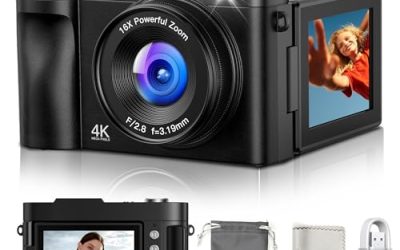
| 4K Digital Camera, 50MP | Teens and beginner vloggers | 4K, 16X zoom, 180° flip screen |
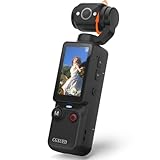
| 4K Vlogging Camera, 330° Lens | Self-recording with tracking | 330° rotating lens, face tracking, autofocus |
| 4K Underwater Camera | Pool, beach, and splash footage | 33FT waterproof, dual-screen, 32GB card |
How to Choose
Resolution, frame rate, and the real meaning of 4K
Resolution is the first number people look at, and it is also the easiest to misread. A 1080P camcorder produces clean, full HD video that is plenty for phones, laptops, and most video sites. A listing with 4K in the title may record at that size, but at this budget it is typically paired with a small sensor and basic processing, so extra pixels do not guarantee extra clarity. Frame rate is rarely listed, so assume standard rates and do not expect smooth slow motion. For a first camera, 1080P in good light is a perfectly respectable target.
Lens type and screen layout
For vlogging, being able to see yourself while recording is the biggest practical advantage. A 180-degree flip screen or a rotating lens, as listed on three of these cameras, lets you frame yourself without guessing. A traditional camcorder with a 2.7-inch LCD is better when you are filming someone else and want a stable grip. Zoom claims like 16x are digital, which means the picture is enlarged and loses detail, so treat zoom as a convenience rather than a way to reach distant subjects.
Battery, storage, and audio
Battery life varies widely and is rarely measured the same way across brands. One listing here mentions a 7-hour battery and another mentions a built-in battery, while the underwater camera lists a 1500mAh battery. Whatever the claim, plan to carry a power bank or a spare. A memory card is included in several titles, usually 32GB, which holds a decent amount of 1080P footage but fills faster at 4K. Audio is a weak point on tiny cameras, so quiet rooms and close microphone distance help.
What to ignore, and where budget cameras cut corners
Ignore megapixel numbers for video use; they describe still photos, not clip quality. Ignore gift-age marketing like “for teens ages 8-16” as a quality signal. The main places a camera under this cap saves money are the sensor, the image processing, the microphone, and the build, which usually means soft low-light footage, tinny audio, and plastic bodies. None of that makes them useless, but it means you should shoot in bright light, keep the camera steady, and use an external recorder if sound is important.
Stabilization deserves its own mention. None of the titles here list optical or electronic stabilization, so assume handheld footage will show shake when you walk. A small tabletop tripod, a steady two-handed grip, or resting the camera on a wall turns a wobbly clip into a usable one. Also consider how you will move files: a card reader or cable is the reliable route, and it is worth confirming that the camera appears as a normal drive on your computer before you plan an editing workflow around it.
The 5 Best Options
CGXUED Mini Camcorder
The CGXUED is a small handheld camcorder built for quick vlogging. The title lists a 180° rotating lens, a 7-hour battery, a 32GB card, and one-button recording, so it is aimed at beginners who want to press a button and start. It suits students filming school projects or travelers who want something light and easy to pocket.
- Strength: a 180° rotating lens helps you frame yourself without guesswork.
- Strength: the 32GB card is included and a 7-hour battery is claimed in the title.
- Trade-off: the title does not state a resolution, so check the full listing before assuming Full HD or better.
Skip it if you need a confirmed video resolution or powerful low-light footage.
Portable Digital Camcorder 1080P
This listing is the most traditional of the five: a portable digital camcorder with 1080P recording, a 2.7-inch LCD screen, 16x digital zoom, a built-in battery, and a 32GB card. It suits parents, grandparents, and anyone who wants a plain recorder for events.
- Strength: 1080P resolution is clearly stated, which keeps expectations realistic.
- Strength: a 2.7-inch LCD and an included 32GB card make it ready for use.
- Trade-off: 16x digital zoom enlarges the picture rather than adding detail, and a built-in battery cannot be swapped.
Skip it if you want a flip screen for self-recording or a camera that can swap batteries.
4K Digital Camera, 50MP
This one is a hybrid: a compact camera with 4K video, 50MP photos, a 16X zoom, and a 180° flip screen, marketed toward teens aged 8 to 16 who want to take pictures and make videos. It suits beginners who want both a vlogging camera and a toy-like photo camera in one device.
- Strength: a 180° flip screen supports selfie-style recording.
- Strength: 4K video and photo modes make it a flexible beginner device.
- Trade-off: the 50MP and 16X claims are likely digital enhancements on a small sensor, so treat them as marketing.
Skip it if you want the cleanest image quality or a proven brand name.
4K Vlogging Camera, 330° Lens
The 4K Vlogging Camera with a 330° rotating lens is the most feature-heavy of the vlogging listings. It lists face tracking, fast autofocus, and a 75MP figure, and it is intended for YouTube-style clips where the lens swings from you to the scene in front of you.
- Strength: a 330° rotating lens lets you switch between selfie and scene views quickly.
- Strength: face tracking and autofocus aim to keep you sharp while moving.
- Trade-off: the 75MP number is a still-photo claim, and the tracking and autofocus quality on a budget sensor is unverified.
Skip it if you want a simple camera with few settings or you distrust inflated megapixel claims.
4K Underwater Camera
The underwater camera is the specialty pick: 4K recording, a 64MP figure, a 33FT waterproof rating, a 32GB card, a dual-screen layout, 16X zoom, autofocus, a floatable body, a 1500mAh battery, and a fill light. It suits pool days, beach trips, and snorkeling clips where a regular camcorder would be at risk.
- Strength: waterproofing to 33FT lets you record where a standard camcorder cannot go.
- Strength: a dual-screen layout, floatable body, and fill light are tailored to water and selfie use.
- Trade-off: as a niche device it is less comfortable as an everyday camcorder, and the 64MP and 16X figures are marketing-heavy.
Skip it if you will mostly film on land or want a conventional camcorder shape.
Which One Fits Your Situation
You are filming school events and family gatherings
The Portable Digital Camcorder 1080P is the straightforward choice, since it states its resolution, has a screen, and includes a card. It is easy to hand to a relative without a tutorial.
You want to start a vlog with minimal setup
The CGXUED Mini Camcorder is the easiest to start with because of the rotating lens and one-button recording. If you want 4K branding and tracking features, the 4K Vlogging Camera with a 330° lens is the more ambitious option.
A teenager wants a first camera for photos and clips
The 4K Digital Camera, 50MP offers a flip screen and a fun feature list. Remember that the zoom is largely digital and the numbers are marketing, so set realistic expectations together.
You spend your free time near water
The 4K Underwater Camera is the only listing designed for splashes, floating, and swimming, with a fill light that helps in dim conditions. Rinse it with fresh water after salt exposure, and keep clips short so a single mistake does not cost you an entire afternoon of footage.
Common Mistakes
- Treating megapixel numbers as a measure of video quality.
- Buying a security or indoor home camera when you want a camera to carry and record with.
- Assuming digital zoom works like an optical lens on a camcorder.
- Skipping a spare battery or power bank for a day of shooting.
- Using the included card without checking its speed, then wondering why 4K clips stutter.
Related guides
- Gaming Laptop Battery Draining While Plugged In Fix
- How To Stop Laptop Thermal Throttling In Software
- Gaming Laptop For High School Students
Frequently Asked Questions
Is a camcorder better than a phone for video?
For most people a recent phone gives cleaner video than any camera under this cap. A dedicated camcorder is worth it for a separate recorder that does not use up your phone, for a kid to use, or for water and travel situations. If you already film with a phone, spend a little time asking what a second device would add, whether that is a rotating lens, a splash-proof body, or simply a recorder that can be handed to a child without risking your phone. Without a clear answer, the camera tends to end up in a drawer after the first week.
Does 4K video matter on a cheap camera?
The label can be misleading because the sensor and processor limit real detail. A well-lit 1080P clip can look better than a dim 4K one, so judge the footage rather than the number.
How much memory do I need?
A 32GB card holds a respectable amount of 1080P video, but 4K uses space quickly. Offload clips regularly and consider a larger card if you plan to record events.
Can I use these cameras as webcams?
Some compact cameras can, but the listing titles here do not promise webcam mode. Check the full description before you rely on it.