
A buyer searching for good gaming laptops faces a market saturated with machines that slap a backlit keyboard on a budget office notebook and call it a gaming rig. The concrete problem is straightforward: you want a laptop that pushes smooth frame rates in current titles without costing what a desktop and monitor would, and without throttling to a crawl after twenty minutes of load. The gap between a machine that genuinely handles modern games and one that merely looks the part comes down to GPU tier, cooling capacity, and whether the RAM and storage keep up with what AAA titles demand.
What separates the best from the rest is sustained performance rather than peak spec sheets. Owner feedback consistently flags that thin chassis with integrated graphics throttle hard under extended sessions, while a proper dedicated GPU paired with adequate thermal headroom holds frame rates steady. Display refresh rate matters too — a 60Hz panel wastes whatever frames the hardware produces. The eight machines below span roughly a fourfold price range, and the honest question for most buyers is whether an integrated-graphics laptop is enough for their library or whether the jump to a dedicated RTX GPU is worth the premium.
As an Amazon Associate we earn from qualifying purchases at no extra cost to you.



Top 3 picks at a glance
Quick Picks
| Product | Best for | Price |
|---|---|---|
| ASUS ROG Strix G16 | Best overall dedicated-GPU value | $1,583.00 |
| AMD Ryzen 7 H255 Gaming Laptop | Light esports on a budget | $695.99 |
| AMD Ryzen 7 7430U Light Gaming Laptop | Portability and everyday use | $589.98 |
| KAIGERR Gaming Laptop | 16-inch screen at a low price | $749.99 |
| 2026 AMD Ryzen 5 7430U Gaming Laptop | Absolute cheapest entry point | $529.98 |
| AMD Ryzen 7 5700U Light Gaming Laptop | Reliable daily driver with light gaming | $559.99 |
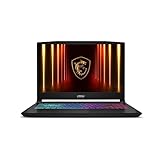
| MSI Katana 15 HX | High-FPS competitive gaming | $2,272.69 |
| NIMO 15.6-inch Light Gaming Laptop | Type-C charging flexibility | $549.96 |
How We Picked
We filtered these machines by four criteria that consistently predict real-world satisfaction: GPU class (dedicated versus integrated), sustained thermal performance based on owner reports, display quality and refresh rate, and component balance so the CPU, RAM, and storage do not bottleneck one another. Price-to-performance ratio was the final tiebreaker when spec sheets looked similar.
The 8 Best Good Gaming Laptops in 2026
ASUS ROG Strix G16
For buyers wanting a genuine dedicated-GPU experience without crossing the two-thousand-dollar line, the Strix G16 pairs an RTX 5060 with a 16-inch FHD+ 165Hz panel and a 14-core Intel i7-14650HX. The 16GB DDR5 and 1TB Gen 4 SSD keep loading times short. Wi-Fi 7 future-proofs the wireless connection, and ROG’s cooling design generally holds thermals during extended sessions.
- Pro: Dedicated RTX 5060 handles AAA titles at high settings with comfortable frame rates.
- Pro: 165Hz, 3ms panel delivers genuinely smooth motion in competitive shooters.
- Con: The 16-inch chassis is noticeably heavier than ultrabooks, limiting portability.
Skip this if your budget caps below $1,000 or you only play indie and browser titles.
AMD Ryzen 7 H255 Gaming Laptop
At under $700, this machine offers 24GB of DDR5 RAM and a Ryzen 7 H255 boosting to 4.9GHz, making it a solid pick for casual gamers who multitask heavily. The 512GB NVMe SSD handles a modest library, and the extra RAM headroom is unusual at this price tier.
- Pro: 24GB DDR5 means no bottleneck running a browser alongside a game.
- Pro: Strong CPU clocks for productivity even though graphics are integrated.
- Con: No dedicated GPU, so AAA titles require low settings or are unplayable.
Skip it if your priority is graphically demanding games at medium or higher settings.
AMD Ryzen 7 7430U Light Gaming Laptop
This lightweight option targets buyers who carry their laptop daily and game only in short bursts. The Ryzen 7 7430U tops out at 4.3GHz with 16GB RAM and a 512GB SSD. It handles older titles, indie games, and esports at modest settings, but it is fundamentally a productivity machine with gaming as a secondary role.
- Pro: Light chassis ideal for commuting and classroom use.
- Pro: Silent operation during casual workloads thanks to low-power U-series design.
- Con: Integrated graphics and lower TDP cause noticeable frame drops in newer releases.
Skip it if you want a primary gaming machine; treat it as a laptop that entertains you between meetings.
KAIGERR Gaming Laptop
KAIGERR puts a 16-inch display, 24GB DDR5, and Radeon RX Vega 8 integrated graphics in a chassis under $750. The 8-core, 16-thread Ryzen 7 H255 at up to 4.9GHz provides respectable CPU horsepower, and the larger screen suits media consumption and split-screen multitasking. WiFi 6 and a backlit keyboard cover the essentials.
- Pro: 16-inch screen and 24GB RAM at this price point is uncommon.
- Pro: Backlit keyboard and WiFi 6 deliver expected features without compromise.
- Con: Vega 8 integrated GPU limits gaming to older and lighter titles at playable framerates.
Skip it if you need a laptop that runs current-generation AAA games; it lacks the necessary graphics muscle.
2026 AMD Ryzen 5 7430U Gaming Laptop
At $529.98, this is the most affordable option in the roundup. A 6-core Ryzen 5 7430U, 16GB RAM, 512GB SSD, AMD Radeon integrated graphics, WiFi 6, HDMI, USB Type-C, and a webcam privacy cover make it a functional daily driver. For buyers on a strict budget who play older titles or very light esports, it clears the bar.
- Pro: Lowest entry price; the webcam cover slide adds practical privacy.
- Pro: Type-C and HDMI ports cover most peripheral needs at this tier.
- Con: Six cores and integrated graphics mean heavy multitasking or modern games will struggle.
Skip it if you plan to keep this laptop for more than two years or want any serious gaming performance.
AMD Ryzen 7 5700U Light Gaming Laptop
The 5700U is a proven 8-core Zen 2 chip that still handles productivity and light gaming competently. Paired with 16GB RAM and a 512GB SSD at just over $550, it suits buyers who already own a desktop for serious gaming and want an affordable portable companion. Owner feedback praises reliability but notes aging integrated graphics.
- Pro: Eight cores remain useful for compiling, video editing, and multitasking.
- Pro: Mature platform with widely available drivers and community troubleshooting.
- Con: Older Zen 2 architecture lags behind newer APUs in both IPC and GPU throughput.
Skip it if you want the best integrated-graphics performance; newer H-series chips offer measurably more.
MSI Katana 15 HX
This is the performance ceiling of the roundup. An RTX 5070, Intel Core i9-14900HX, 32GB DDR5, and a 1TB NVMe SSD drive a 15.6-inch QHD+ panel at 165Hz. For competitive players who want high frame rates at QHD without a desktop, the Katana 15 HX delivers, and MSI’s cooler design sustains output better than most chassis this thin.
- Pro: RTX 5070 at QHD+ 165Hz is a genuinely competitive-gaming configuration.
- Pro: 32GB RAM and 1TB storage eliminate upgrade pressure for several years.
- Con: The price sits well above the other seven options, making it a significant investment.
Skip it if a 1080p panel with an RTX 5060 is sufficient; the premium is steep for a modest resolution bump.
NIMO 15.6-inch Light Gaming Laptop
NIMO packs a Ryzen 5 6600H with Radeon 660M graphics, 16GB DDR5, and a 512GB SSD into a sub-$550 frame. The 100W USB Type-C charging is a standout, letting you leave the proprietary brick at home. Fingerprint login adds convenience. The 660M iGPU edges past older Vega options in light titles, and the 6600H’s Zen 3+ architecture is a generation ahead of the 7430U in build quality.
- Pro: 100W Type-C charging adds real portability flexibility.
- Pro: Radeon 660M is the strongest iGPU in this price band.
- Con: The 15.6-inch chassis is bulkier than ultralight alternatives.
Skip it if you need the absolute cheapest price; the Ryzen 5 7430U option undercuts it by twenty dollars.
Buying Guide
Dedicated GPU vs. Integrated Graphics
The single biggest spec that determines whether a machine is one of the good gaming laptops is the GPU. A dedicated RTX 5060 or 5070 handles AAA titles at high settings, supports ray tracing, and sustains frame rates through long sessions. Integrated Radeon or Vega graphics cap you at older titles, indie games, and esports at reduced settings. If your library includes anything from the last two years at medium-to-high detail, budget for a dedicated GPU. The price jump from integrated to dedicated in this group is roughly a thousand dollars, and that premium buys a fundamentally different experience.
Display Refresh Rate and Resolution
A GPU producing 120 frames per second is wasted on a 60Hz panel. Look for at least


