
Choosing between a thin high end gaming laptop and a thick gaming laptop is less about which one is “better” and more about how your home actually works. A slim machine may fit neatly on a small desk, travel easily between rooms, and look appropriate in a shared living space. A thicker model can offer stronger sustained performance, quieter cooling, more ports, and easier upgrades.
The difference is especially important when a laptop is expected to serve as both a gaming system and a home computer. You may care about couch comfort, desk space, fan noise, repair costs, and whether the computer can handle several years of new games. A premium thin laptop prioritizes mobility and design. A thick gaming laptop usually prioritizes thermal headroom and performance per dollar.
As an Amazon Associate we earn from qualifying purchases at no extra cost to you.
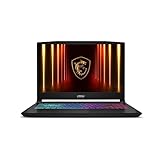


Top 3 picks at a glance
Quick Verdict
Choose a thin high end gaming laptop if you move your computer often, have limited space, prefer a more polished appearance, or need one device for gaming, school, and work. Expect to pay more for comparable graphics performance and to make some compromises in sustained speed, upgrade access, and fan noise.
Choose a thick gaming laptop if the computer will spend most of its life on a desk and you want the best frame rates, cooling, keyboard comfort, and long-term value. Its larger chassis may weigh 6 to 8 pounds before the charger, but it can deliver more consistent performance and provide room for additional storage or memory.
For context, current gaming laptops can range from about $1,000 for an entry-level configuration to more than $3,000 for a premium model. The listed MSI Katana 15 HX at $2,270.23 illustrates how a high-performance configuration can approach desktop pricing, while the Lenovo Legion 5a at $1,899.99 occupies a strong mid-to-high-end position. A model such as the Acer Nitro V 16S at $1,449.99 shows the value available in a relatively streamlined 16-inch design. The $559.99 KAIGERR is a general-purpose budget laptop rather than a direct high-end gaming competitor.
Side by Side
| Factor | Thin high end gaming laptop | Thick gaming laptop |
|---|---|---|
| Typical thickness | About 0.6 to 0.9 inches | About 1.0 to 1.5 inches |
| Typical weight | About 4 to 6 pounds, plus charger | About 6 to 8.5 pounds, plus a larger charger |
| Comfort | Better for carrying and occasional lap use; still gets hot under load | More comfortable on a desk because of a larger keyboard and stable base |
| Durability | Premium metal construction can feel rigid, but thin panels have less room for impact protection | Bulkier chassis often tolerates desk use well and protects internal components effectively |
| Price range | Roughly $1,500 to $3,500 for serious gaming hardware | Roughly $1,000 to $3,000, depending on graphics and display |
| Maintenance | Fans and vents can be harder to access; some parts may be soldered | Often easier to clean and upgrade, though designs vary |
| Space needed | Usually a 14- or 15-inch footprint; easier on a 24- to 36-inch desk | Often a 15- or 16-inch footprint; needs more room for airflow and accessories |
| Look | More understated and suitable for a living room or office | More visibly gaming-focused, with larger vents and more aggressive styling |
| Resale | Premium materials and portability may help appeal to buyers | Performance value can be attractive, but size and battery wear may narrow demand |
| Best for | Small homes, frequent movers, hybrid work, and shared rooms | Dedicated desks, demanding games, upgrades, and maximum value |
Where Thin High End Gaming Laptop Wins
It fits more homes. A slim laptop is easier to place on a compact desk, kitchen table, or pull-out workstation. A 14- or 15-inch model typically needs less than 14 inches of desk depth, although you should leave several inches behind it for exhaust. It can also slide into a drawer or protective sleeve when the room needs to serve another purpose.
It is easier to move. A difference of 2 pounds matters when you carry the laptop upstairs, take it to work, or move it between a desk and television. The charger can be a significant part of the load, but thin premium laptops generally have a more manageable travel setup than high-wattage thick models.
It looks less intrusive. A discreet dark aluminum chassis, restrained lighting, and a compact power adapter are easier to blend with home furnishings. This matters in a living room, guest room, or open-plan apartment where a large gaming machine may look out of place beside neutral furniture.
It can still provide high-end performance. A thin laptop with a modern dedicated GPU can handle demanding games, creative applications, and high-refresh-rate displays. However, graphics performance depends on the GPU’s configured power limit, not just its name. Two laptops with the same GPU may perform differently if one has less cooling capacity.
The tradeoff is heat. Slim systems have less internal volume for heat pipes, fans, and airflow. During extended gaming, they may reduce clock speeds, become loud, or make the keyboard and underside uncomfortable. Battery life is also limited during gaming; a wall outlet remains essential for full performance.
Where Thick Gaming Laptop Wins
Cooling is the main advantage. A larger chassis can use bigger fans, more heat pipes, and wider exhaust openings. That does not make every thick laptop quiet, but it gives the hardware more thermal headroom. Performance is more likely to remain consistent during a two-hour gaming session rather than dropping after a short burst.
You get more performance for your money. Thick systems commonly deliver higher-power processors and graphics chips at lower prices than equally powerful slim designs. The $1,449.99 Acer Nitro V 16S and $1,899.99 Lenovo Legion 5a represent the kind of pricing buyers may find in the upper midrange, while the $2,270.23 MSI Katana 15 HX shows how a powerful configuration can cost substantially more.
The keyboard and ports are often better. A deeper chassis leaves room for a more comfortable keyboard, a full-size layout, larger speakers, and a wider selection of ports. Depending on the model, you may find multiple USB-A ports, USB-C, HDMI, Ethernet, and a dedicated headset jack without needing a dock.
Upgrades and cleaning may be simpler. Many thick laptops provide access to two memory slots or two M.2 storage bays, although you should verify the service manual before buying. More space around the components can also make dust removal less frustrating. Keep the laptop on a hard surface, clean the vents periodically, and avoid using it on carpet or bedding.
The disadvantages are clear: bulk, a larger power brick, and a more noticeable presence in the room. A thick laptop may also be awkward on a lap because its underside needs open airflow. It is best treated as a portable desktop rather than a truly mobile computer.
Cost Over 5 Years
Purchase price is only part of the ownership calculation. A serious gaming laptop may cost between $1,400 and $2,700, while accessories can add $100 to $400 for a mouse, headset, stand, external storage, or monitor. A cooling stand is not mandatory, but it may improve positioning and airflow for either design.
Over five years, plan for possible battery replacement at roughly $100 to $250, depending on the model and labor. Storage upgrades can cost about $60 to $200, and a replacement charger may cost $70 to $180. A thick laptop may save money initially and offer easier upgrades, while a thin premium laptop may retain more appeal if its build quality and display remain desirable.
The larger financial risk is graphics obsolescence. Neither style lets you replace the laptop GPU in the same way you would replace a desktop card. Spending extra on a stronger GPU and at least 16GB of memory—and preferably 32GB for demanding modern use—can extend useful life. In 2026, buyers should also consider display resolution carefully: a high-refresh 1080p or 1200p screen is easier to drive for years than a very high-resolution panel paired with a modest GPU.
Which One for Your Home
Small apartment
Choose the thin high end gaming laptop if your desk doubles as a dining or work surface. A 14- or 15-inch system is easier to store and move, and its quieter idle profile and understated design are helpful in a shared room. Pair it with a compact stand and external monitor only when needed.
Family with kids or pets
A thick gaming laptop is often the safer practical choice for a permanent desk. Its heavier base is less likely to slide, and its cooling system may cope better with long sessions. Keep it away from drinks, pet hair, and floor-level dust, and use a cable-management system to prevent the power cord from becoming a tripping hazard.
Rental home
Either style works, but a thin model is easier if you cannot create a permanent office. It can move without taking over the room and does not require a large desk. If you choose a thick model, reserve a stable surface with at least 24 inches of width and enough clearance behind the exhaust.
Long-term home
Choose the thick gaming laptop when you have a dedicated workspace and want the strongest five-year value. Look for accessible memory and storage, a replaceable battery, a robust hinge, and a graphics configuration with enough headroom for future games. A thin model makes more sense if portability will remain important throughout ownership.
FAQ
Is a thin high end gaming laptop as powerful as a thick gaming laptop?
It can use similarly named processors and GPUs, but the thick model usually sustains higher power levels for longer. Check the manufacturer’s power specifications, cooling design, and independent testing rather than comparing component names alone.
Which type lasts longer?
Longevity depends on build quality, heat management, care, and upgrade options. A thick laptop has a cooling advantage, while a premium thin laptop may have stronger materials. Regular vent cleaning and avoiding blocked airflow matter more than thickness alone.
Can I use a gaming laptop on my lap?
You can use either briefly for light tasks, but gaming on a lap is not recommended. Your legs can block intake vents, and the underside may become hot. Use a hard, flat surface whenever the dedicated GPU is active.
Is a $559.99 gaming laptop a substitute for a high-end model?
Usually not. A budget machine such as the $559.99 KAIGERR may suit web browsing, streaming, office work, and lightweight games, but it should not be compared directly with systems featuring dedicated high-end graphics. For demanding gaming, budget for a dedicated GPU, 16GB or more of memory, and fast solid-state storage.


