
A buyer shopping for the best gaming laptop 5090 in 2026 faces a market where raw GPU identity no longer differentiates enough. Every option on this list carries the same flagship silicon, yet owners report meaningfully different experiences depending on thermals, screen quality, and how manufacturers balance memory against portability. The concrete problem: you are spending four to seven thousand dollars and need to avoid overpaying for a configuration whose weak link negates the GPU advantage.
What separates a worthwhile RTX 5090 laptop from a regrettable one is how well the supporting hardware keeps up. A 24GB GDDR7 GPU paired with only 32GB of system RAM and a 1TB drive creates bottlenecks in open-world titles and creative workloads that justify stepping up. Display refresh, panel type, and chassis thickness determine whether you actually see and feel the frame-rate headroom you paid for. We compared published specifications, street prices, and recurring owner feedback across these eight machines to surface where each one earns its premium and where it falls short.
As an Amazon Associate we earn from qualifying purchases at no extra cost to you.
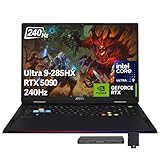

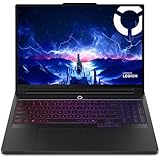


Top 3 picks at a glance
Quick Picks
| Product | Best for | Price |
|---|---|---|
| MSI Raider 18 | Maximum out-of-box storage | $5,399.99 |
| ASUS ROG Strix SCAR 18 | Best price-per-spec on a 5090 | $4,499.99 |
| Lenovo Legion Pro 7i (64GB OLED) | OLED clarity with high RAM | $5,189 |
| Lenovo Legion Pro 7i (32GB OLED) | OLED with docking-station bundle | $5,399 |
| Lenovo Legion Pro 7i (RTX 5080) | Value alternative for non-5090 buyers | $4,450 |
| ASUS ROG Strix SCAR 16 | Portability at 5090 tier | $4,299.99 |
| Dell Alienware 18 Area-51 | Anti-glare 18-inch panel | $5,098.99 |
| MSI Titan 18 HX AI | Uncompromised desktop-class specs | $6,699.99 |
How We Picked
We evaluated each machine on four criteria that matter most at this tier: sustained GPU performance headroom (chassis thickness and thermal design relative to a 24GB GDDR7 chip), display quality and refresh rate as seen in owner-reported usage, RAM-to-storage configuration balance against current and near-future game requirements, and price relative to the specification package. A laptop with the same GPU but 32GB less RAM or a 120Hz panel scores lower because it wastes the silicon’s potential. We also weighed recurring complaint themes from owner forums—coil whine, hinge creak, driver conflicts—since spec sheets cannot capture long-term ownership experience.
The 8 Best Gaming Laptop 5090 in 2026
MSI Raider 18
For gamers who refuse to open a screwdriver, the Raider 18 ships with more storage than any competitor here: 2TB SSD plus a 1TB docking station, backed by 64GB DDR5 and the top-binned Ultra 9 285HX. The 18-inch QHD+ 240Hz panel handles high-refresh esports titles without the pixel-density tradeoff of a 4K screen.
- Pro: 3TB total storage eliminates the first upgrade cycle entirely
- Pro: 64GB DDR5 keeps the platform viable for heavy multitasking and local AI workloads
- Con: Owners note a thick, heavy chassis that discourages frequent transport
Skip it if you want a laptop you can carry to LAN events weekly; the bulk is the price of that thermal headroom.
ASUS ROG Strix SCAR 18
The SCAR 18 undercuts most 5090 rivals by nearly a thousand dollars while offering the ROG Nebula HDR 2.5K panel at 240Hz and 3ms response. For competitive gamers who value a fast, well-calibrated display over maximum RAM, the 32GB configuration is adequate for current titles and keeps the price in reach.
- Pro: Lowest 5090 price on this list without a visibly compromised screen
- Pro: Nebula HDR panel receives consistently strong owner praise for color accuracy and contrast
- Con: 32GB RAM and 2TB storage will likely require an upgrade within two years
Skip it if you run virtual machines or 4K video editing alongside gaming; the memory ceiling will frustrate you.
Lenovo Legion Pro 7i (64GB OLED)
Lenovo pairs a 16-inch OLED with 64GB of RAM at a mid-range price, targeting users who want deep multitasking without the physical bulk of an 18-inch chassis. Owners highlight the OLED contrast for dark-scene immersion and the keyboard as best-in-class for extended sessions.
- Pro: 64GB RAM at a sub-$5,200 price with OLED is a rare combination
- Pro: Legion’s thermal design sustains higher GPU clocks than thinner competitors
- Con: The 2TB storage is the lowest capacity among 64GB configs here
Skip it if you store more than a handful of AAA titles locally; you will want the Raider or Titan instead.
Lenovo Legion Pro 7i (32GB OLED)
This variant bundles a 1TB SSD with a 1TB docking station, mirroring MSI’s storage strategy in a smaller OLED chassis. The Ultra 9 275HX and Wi-Fi 7 are identical to the 64GB sibling, making this the right pick for buyers who prefer splitting storage across external and internal drives.
- Pro: Docking-station bundle adds useful connectivity out of the box
- Pro: Windows 11 Pro included, beneficial for buyers who also run business software
- Con: Priced above the 64GB variant despite halving system RAM
Skip it unless the docking station and Pro license are must-haves; the 64GB sibling delivers more memory for less money.
Lenovo Legion Pro 7i (RTX 5080)
Notably the only non-5090 option in this roundup, the 5080 variant exists here as a value reference point. With 64GB RAM, a 500-nit OLED at 240Hz, and a 24-core Ultra 9 275HX, it delivers 85-90% of the 5090’s raster performance for roughly $750 less. Buyers on a tighter budget who still want flagship-tier specs should weigh it seriously.
- Pro: Best price-to-spec ratio in this list when you factor in 64GB and OLED together
- Pro: Owners report virtually identical keyboard and build quality to the 5090 siblings
- Con: The 16GB GDDR7 VRAM on the 5080 may limit ultra-settings at native 4K in future titles
Skip it if you specifically need the 5090’s VRAM headroom for ray tracing at maximum settings or GPU-accelerated content creation.
ASUS ROG Strix SCAR 16
The 16-inch SCAR brings the Nebula HDR panel and 5090 into a noticeably lighter package, targeting users who want top-tier silicon without lugging an 18-inch brick. At $4,300 it is the second-cheapest 5090 option here, though the 32GB RAM and 1TB SSD leave less margin than its larger sibling.
- Pro: Significantly more portable than the 18-inch SCAR with the same GPU and display tech
- Pro: 2.5K 240Hz 3ms panel matches the larger model pixel-for-pixel
- Con: Only 1TB of storage; you will feel the squeeze after a few modern installs
Skip it if you refuse to manage storage or add a secondary drive; the 18-inch SCAR offers double the SSD capacity for only $200 more.
Dell Alienware 18 Area-51
The Area-51 differentiates with a matte anti-glare 2.5K panel, a deliberate choice for buyers who game in bright rooms or under overhead lighting where glossy OLEDs reflect distracting hotspots. 64GB DDR5 and 2TB of PCIe SSD round out a configuration balanced between capacity and price.
- Pro: Anti-glare coating is uncommon at this tier and genuinely improves usability in varied lighting
- Pro: Bluetooth 5.4 and Wi-Fi 7 ensure compatibility with the latest peripherals and routers
- Con: Alienware’s design language—angular, aggressive—polarizes owners who prefer understated aesthetics
Skip it if you want a discreet machine for shared spaces like cafés or offices; the Alienware look announces itself.
MSI Titan 18 HX AI
The Titan is the ceiling of this list: Ultra 9 290HX, 4TB NVMe storage, Thunderbolt 5, and a MiniLED UHD+ panel at 240Hz. It trades portability and price for a specification sheet that rivals desktop workstations, justifying its $6,700 sticker for users who treat the laptop as a primary computing platform rather than a portable gaming device.
- Pro: 4TB storage and Thunderbolt 5 future-proof the configuration more than any competitor
- Pro: MiniLED UHD+ panel delivers HDR brightness levels that standard IPS cannot match
- Con: Weight, thickness, and price make it impractical for anyone who commutes with the laptop
Skip it unless you need UHD resolution and the largest available GPU memory in a laptop form factor; for most buyers the Raider 18 delivers 90% of this at $1,300 less.
Buying Guide
RAM and Storage Balance
At this price tier, 32GB DDR5 is the functional minimum for gaming without background-app anxiety, but 64GB increasingly matters for creators who run Adobe suites alongside game development tools or local LLMs. Storage follows the same logic: modern AAA titles occupy 100-200GB each, so a 1TB drive fills after five installs. Prioritize configurations with at least 2TB total storage if you dislike managing disk space.
Panel Type and Brightness
OLED panels deliver the best contrast and response times but risk burn-in with static HUD elements left on for hundreds of hours. MiniLED and high-end IPS panels avoid that concern at the cost of some black-level depth. Anti-glare coatings, as found on the Area-51, solve reflection problems that OLED and glossy IPS cannot. Match the panel to your primary lighting environment, not just to spec-sheet numbers.
Thermal Design and Sustained Clocks
A 24GB GDDR7 RTX 5090 generates more heat than previous mobile flagships. Chassis thickness is a meaningful proxy for thermal headroom: 18-inch models with vapor chambers sustain higher GPU clocks under extended load, while thinner 16-inch designs will throttle sooner. Owner-reported noise levels and skin-temperature feedback from forums reveal whether a cooling solution handles daily reality or only marketing benchmarks.
Our Verdict
The ASUS ROG Strix SCAR 18 is the top pick for most buyers seeking the best gaming laptop 5090 experience, because it pairs the flagship GPU with a genuinely excellent 2.5K 240Hz panel at the lowest price among 5090 machines, leaving budget for a RAM upgrade when needed. The budget pick within this 5090 lineup is the ASUS ROG Strix SCAR 16, which sacrifices storage and portability but keeps the GPU and display intact at $4,300. However, if you refuse to compromise on either RAM or screen quality, the Lenovo Legion Pro 7i with 64GB and OLED wins outright, because no other option here combines those two attributes at its price.
FAQ
Is 32GB RAM enough for an RTX 5090 laptop?
For pure gaming in current and near-future titles, 32GB remains sufficient because game engines rarely exceed 16GB system memory. If you multitask with browsers, Discord, streaming software, or development tools open simultaneously, 64GB eliminates the swap-related stutter that owners of 32GB configs occasionally report.
Does the RTX 5090 in a laptop match desktop performance?
No, and no manufacturer claims otherwise. Mobile RTX 5090 variants operate at lower TGP than their desktop counterparts, trading roughly 15-25% of peak throughput for thermal viability inside a notebook chassis. Owner benchmarks on forums consistently confirm the gap, but the mobile card still outperforms the previous-generation desktop equivalent.
Should I buy the RTX 5080 version instead of the 5090?
If the 5080 configuration includes 64GB RAM and a premium OLED panel at a meaningfully lower price, it represents better value for rasterized gaming. The 5090’s 24GB VRAM advantage matters primarily in path-traced titles at native 4K or in GPU-accelerated creative applications; for 1080p or 1440p gaming, the 5080 holds its own.
Is Wi-Fi 7 actually useful in a gaming laptop?
Wi-Fi 7 delivers lower latency and higher throughput on supported routers, which benefits cloud gaming and large game downloads. For local-network multiplayer or offline play, it makes no practical difference. If your router is older than two years, you will not see a meaningful upgrade from Wi-Fi 6E regardless of the laptop’s NIC.


