
Shopping for a gaming setup almost always starts with the laptop itself, but the keyboard decision sneaks up on people. You buy a machine like the MALLRACE Gaming Laptop with its built-in membrane keys, game on it for a month, and then start wondering whether an external mechanical keyboard would actually make you play better — or just clutter your desk. That is the real decision here: whether to rely on the membrane keyboard built into your gaming laptop, or add a separate mechanical board to your setup.
This guide breaks down both options honestly. The built-in membrane keyboard costs nothing extra and travels with your laptop. An external mechanical board — even a budget model like the Redragon with hot-swappable red switches at around $30 — adds cost, weight, and desk space, but changes how every keystroke feels. Neither choice is wrong. The right one depends on where you play, how much you move around, and who shares your home.
As an Amazon Associate we earn from qualifying purchases at no extra cost to you.

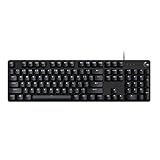


Top 3 picks at a glance
Quick Verdict
If you game mostly at one desk and care about feel, get a mechanical keyboard. Even entry-level boards deliver consistent actuation, better anti-ghosting, and keys you can replace individually. If you play in different rooms, game on the couch, or travel with your laptop, the built-in membrane keyboard is genuinely fine — modern laptop keyboards handle most games without issue. A middle path works too: many people use the laptop keyboard for everyday tasks and pull out a mechanical board for serious sessions.
Side by Side
| Factor | Mechanical Keyboard | Membrane (Laptop Built-In) |
|---|---|---|
| Keystroke feel | Tactile, consistent per-key switch; travel typically 3–4mm | Softer, mushier; shallow travel around 1.5–2mm |
| Comfort for long sessions | Better; many boards offer wrist rests and adjustable feet | Adequate, but fixed typing angle tied to laptop chassis |
| Durability | Switches rated 50–100 million presses; replaceable keycaps and switches | Whole membrane wears as a unit; repairs usually mean replacing the laptop top case |
| Price range | $25–$80 for solid budget boards; premium models $100+ | $0 — already included in the laptop |
| Maintenance | Keycaps removable for cleaning; individual switches replaceable | Hard to clean under keys; spills can disable the whole deck |
| Space needed | Adds 12–18 inches of width and 1.5–3 lbs to your desk | None; part of the laptop itself |
| Look | Backlit modes, custom keycaps, visible switches on some models | Clean, minimal, integrated |
| Resale value | Separate item — sell or move it to your next machine | Stays with the laptop; wear lowers its resale appeal |
| Portability | Extra 1.5–3 lbs in your bag | No added weight |
| Best for | Desk-based gamers who log long hours | Mobile players, couch gamers, casual use |
Where Mechanical Keyboard Wins
Consistent input register. Mechanical switches actuate at a defined point — linear red switches, for example, typically trip around 2mm of travel with roughly 45g of force. Every press feels identical, which matters in games where you tap keys rapidly. Combined with full anti-ghosting, rapid inputs register reliably, something budget laptop keyboards sometimes struggle with during crowded fights.
Cheap entry point. You no longer need to spend $100 to get real mechanical switches. The Redragon wired board at $29.99 includes hot-swappable red switches and double-shot PBT keycaps — features that were premium-tier a few years ago. Step up to the Logitech G413 SE at around $68 and you get a full-size layout from an established brand. Compare that to a $500–$560 gaming laptop like the KAIGERR with a Ryzen 7430U, and the keyboard is a small fraction of your total spend.
Repairability. Spill coffee on a mechanical board and you can often swap the affected switch or keycaps. A laptop membrane deck rarely survives liquid, and repairing it usually means a service center visit costing $100–$250.
Longevity. A well-kept mechanical board outlives several laptops. When you upgrade machines in 2026 or beyond, the board moves with you.
Where Membrane for Gaming Laptop Wins
Zero extra cost and space. The keyboard on a 15.6-inch laptop like the MALLRACE is already there, adding no desk footprint, no cables, and no bag weight. In a small apartment or dorm, that matters.
True portability. Couch gaming, coffee shops, a friend’s house — the built-in keyboard goes wherever the laptop goes. An external board means carrying one more thing and hunting for a flat surface.
Quieter operation. Membrane laptop keys are quieter than most mechanical switches. If you game late at night next to a sleeping partner or in a shared living room, laptop keys won’t carry through walls the way clicky or even linear mechanical switches can.
Simple workflow. Many games barely stress the keyboard — turn-based strategy, sports titles, controllers-first games. If you mostly play with a gamepad, the built-in keyboard handles everything else without added expense.
Cost Over 5 Years
Membrane-only route: $0 in keyboard spend. The risk is a worn or spill-damaged laptop deck, which can cost $100–$250 to repair or contribute to needing a new laptop sooner. Expect visible key shine and reduced feel by year three or four of heavy use.
Mechanical route: A $30 board like the Redragon, plus roughly $15–$25 in replacement keycaps or switches if you customize over five years — call it $45–$55 total. A $68 board like the Logitech G413 SE might need nothing beyond cleaning, totaling around $70–$85. Either way, the board likely outlasts the laptop itself and transfers to your next machine, effectively amortizing its cost across two or more laptops.
Over five years, the mechanical route costs less than one out-of-warranty laptop keyboard repair — while improving feel the entire time.
Which One for Your Home
Small Apartment or Dorm
Space is the constraint. A 15.6-inch laptop plus an 17-inch-wide keyboard plus a mouse demands about 30 inches of clear desk depth you may not have. Start with the built-in membrane keyboard, and if you add a mechanical board, choose a compact tenkeyless or 60% model to keep the footprint small. If your desk doubles as a dining table, portability wins — stay membrane.
Family with Kids or Pets
Spills, crumbs, and pet hair are the enemies here. Ironically, a mechanical keyboard protects your expensive hardware: a $30 board takes the abuse instead of a $500–$560 laptop. Keep snacks away from the desk, wipe keycaps monthly, and treat any board as a consumable shield for the laptop. The laptop keyboard stays pristine for the family members who use it for homework.
Rental or Frequently Moved Home
If you relocate often, every pound in your bag counts. The built-in keyboard travels with the laptop automatically, and there is one less cable and one less item to pack. If you do add a mechanical board, the hot-swappable Redragon is light enough — around 1.5–2 lbs — that moving stays painless, and its durability means it survives a few boxes.
Long-Term Home
With a dedicated desk you’ll never regret a mechanical keyboard. Pair a full-size board like the Logitech G413 SE with a laptop such as the KAIGERR — its numeric-keyboard-friendly layout and USB-A and Type-C ports make hookup trivial — and you get laptop flexibility with desktop-grade feel. The board outlasts the laptop and carries to your next upgrade, making it one of the highest-value peripherals you can buy.
FAQ
Do pro gamers use mechanical keyboards on laptops?
Competitive players overwhelmingly use external mechanical keyboards for their consistent actuation and anti-ghosting, regardless of whether they play on a laptop or desktop. That said, skill matters far more than switch type — a membrane keyboard won’t hold you back below high-level competitive play.
Can I use a mechanical keyboard with any gaming laptop?
Yes. Any laptop with a USB-A or USB-C port works, and essentially every modern gaming laptop, including budget AMD models, has both. Wired boards need no drivers for basic use on Windows or Mac.
Are mechanical keyboards too loud for shared spaces?
Linear red switches are much quieter than clicky blues, though still louder than laptop membrane keys. If you share a bedroom or game late at night, test in person or choose membrane — or look for boards sold with O-ring dampeners, which cut noise noticeably for a dollar or two.
Is a $30 mechanical keyboard actually worth it?
For most buyers, yes. Boards like the Redragon include hot-swappable switches, PBT keycaps, and full anti-ghosting — genuine mechanical construction at a price comparable to a nice mouse. The main compromises are plasticky cases and simpler software compared to $80+ boards, but the core typing and gaming experience is real mechanical feel.


