
The Acer Nitro V with the i5-13420H and RTX 5050 8GB at $1,049.99 is the strongest value in Acer’s current lineup, delivering a current-generation GPU and 165Hz display at a price meaningfully below every Predator Helios model in this roundup. Acer splits its gaming laptop catalog into two clear tiers — Predator Helios for flagship performance and display technology, and Nitro for accessible, genuinely capable mid-range gaming — and this roundup spans both to identify where the real value sits across a wide $766 to $2,199.99 price range.
Top 3 picks at a glance
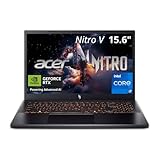
Top picks at a glance
As an Amazon Associate we earn from qualifying purchases at no extra cost to you.






| Model | Key spec | Price | Best for |
|---|---|---|---|
| Nitro 5 AN515-45-R83Z | Ryzen 5 5600H, GTX 1650, 8GB DDR4 | $766 | Absolute budget, older GPU generation |
| Nitro V (i5, RTX 5050) | i5-13420H, RTX 5050 8GB, 165Hz, 16GB | $1,049.99 | Best overall value |
| Nitro V (i7, RTX 4050) | i7-13620H, RTX 4050, 165Hz, 16GB | $1,199.9 | Stronger CPU, previous-gen GPU |
| Nitro V ANV15-52-73D8 | Specs not disclosed in listing | $1,399.49 | Verify specs before ordering |
| Predator Helios Neo 14 AI | Ultra 7 255H, RTX 5060, 14.5″ 165Hz G-SYNC | $1,439.99 | Compact flagship portability |
| Nitro 16S AI Copilot+ | Ryzen AI 9 365, RTX 5070Ti, 16″ 180Hz | $1,999.99 | Strong GPU at Nitro-tier positioning |
| Predator Helios Neo 16 AI | Ultra 9 275HX, RTX 5070Ti, 16″ 240Hz G-SYNC | $2,029.99 | Flagship 16″ display and cooling |
| Predator Helios Neo 18 AI | Ultra 9 275HX, RTX 5070Ti, 18″ 240Hz G-SYNC | $2,199.99 | Largest flagship display |
Acer Nitro 5 AN515-45-R83Z, Ryzen 5 5600H / GTX 1650, $766
This is the oldest and most affordable laptop in Acer’s current lineup covered here, pairing a Ryzen 5 5600H with a GTX 1650 — a GPU generation meaningfully behind every other RTX-equipped laptop in this roundup — alongside 8GB of DDR4 RAM and a 256GB NVMe SSD.
The GTX 1650 predates Nvidia’s RTX architecture entirely, meaning this laptop lacks ray tracing capability and DLSS upscaling support that every other listing in this roundup benefits from, a real limitation for buyers wanting current-generation feature support alongside raw frame rates.
Estimated performance based on the GTX 1650’s known class: 60-75 fps at 1080p medium in older or lightweight esports titles, with current AAA releases requiring significant setting reductions to maintain playable frame rates.
8GB of RAM compounds this laptop’s dated positioning, creating the same multitasking bottleneck discussed across our other laptop brand roundups — workable for gaming alone, but tight the moment background applications run alongside a current title.
- Pros
- Lowest price in Acer’s current lineup
- Functional for older or lightweight esports titles
- Compact 256GB NVMe SSD for reasonably fast boot times
- Cons
- GTX 1650 predates RTX architecture, no ray tracing or DLSS
- 8GB RAM is tight for multitasking
- 256GB storage is small for a modern game library
Who it’s for: strict budget buyers who understand this laptop’s dated GPU generation and plan to game without heavy multitasking.
Acer Nitro V, Intel i5-13420H / RTX 5050 8GB, $1,049.99
This is the strongest value in Acer’s entire current lineup: a current-generation RTX 5050 with 8GB of GDDR7 memory, paired with an i5-13420H, 16GB of RAM, a 512GB PCIe SSD, and a 165Hz FHD IPS display, all at a price under $1,050.
Estimated performance based on the RTX 5050’s known class: 75-90 fps at 1080p high in most current titles, a genuine current-generation performance tier that includes full DLSS and ray tracing support the older GTX 1650 above lacks entirely.
The 165Hz refresh rate here is a real step up from the Nitro 5’s older display, and the 8GB of GDDR7 memory on this specific RTX 5050 configuration provides solid texture headroom for current titles at 1080p settings.
At just over $1,000, this represents the clearest entry point into genuine current-generation Acer gaming laptop performance, undercutting both the previous-generation RTX 4050 Nitro V and every Predator Helios listing in this roundup by a wide margin.
- Pros
- Current-generation RTX 5050 with 8GB GDDR7 memory
- 165Hz FHD IPS display
- Best value-to-performance ratio in Acer’s entire lineup
- Cons
- 512GB SSD may feel tight for a large game library
- Standard FHD resolution rather than the QHD panels on Predator Helios models
- No G-SYNC confirmation in this listing
Who it’s for: nearly any budget-to-mid-range buyer — this laptop’s combination of current-gen GPU and price makes it the default recommendation in Acer’s lineup.
Acer Nitro V, Intel i7-13620H / RTX 4050, $1,199.9
This Nitro V configuration steps up to a stronger i7-13620H CPU while stepping down to the previous-generation RTX 4050 GPU compared to the RTX 5050 Nitro V above — a genuine trade-off worth understanding directly before assuming higher price always means better overall specs.
Estimated performance based on the RTX 4050’s known class: 70-85 fps at 1080p high, a modest step behind the current-gen RTX 5050 covered above despite this laptop’s higher price, though the i7-13620H’s twenty threads do provide stronger multitasking headroom than the i5-13420H alternative.
16GB of RAM and a 1TB Gen4 SSD here provide double the storage capacity of the RTX 5050 Nitro V, a genuine practical advantage for buyers with a larger game library, worth weighing against the GPU generation trade-off.
WiFi 6 rather than the WiFi 6E found on several other Acer listings in this roundup rounds out this laptop’s slightly more budget-focused connectivity package despite its higher overall price than the RTX 5050 variant.
- Pros
- 1TB storage, double the RTX 5050 Nitro V’s capacity
- Stronger twenty-thread i7-13620H CPU
- 165Hz FHD IPS display
- Cons
- Previous-generation RTX 4050 GPU despite the higher price than the RTX 5050 variant
- WiFi 6 rather than WiFi 6E
- Weaker overall value than the cheaper RTX 5050 Nitro V for most gaming-focused buyers
Who it’s for: buyers who specifically want more storage and CPU multitasking headroom and are willing to accept a previous-generation GPU for it.
Acer Nitro V, ANV15-52-73D8, Black, $1,399.49
This specific Nitro V listing doesn’t disclose its CPU, GPU, RAM, or storage specifications beyond the model number and color — a genuine information gap at a price higher than both of the fully-specified Nitro V listings covered above, making this one difficult to evaluate or recommend without direct verification.
Buyers interested in this listing should check Acer’s official specification pages for the exact ANV15-52-73D8 model number before ordering, since the price alone (higher than two other, more fully-specified Nitro V configurations in this roundup) doesn’t tell you what CPU or GPU tier you’d actually be getting.
Given that both the RTX 5050 and RTX 4050 Nitro V listings above provide full spec transparency at lower prices, this listing offers no clear advantage unless its actual specifications, once verified, turn out to exceed those alternatives meaningfully.
We’re including this listing directly because it appeared in current Acer gaming laptop search results, and because it’s a useful reminder that price alone is never a reliable substitute for confirmed specifications when comparison shopping.
- Pros
- Acer Nitro branding suggests genuine discrete-GPU gaming capability
- Black color option confirmed
- May include features not disclosed in this specific listing
- Cons
- No CPU, GPU, RAM, or storage specifications disclosed
- Priced above two fully-specified Nitro V alternatives in this roundup
- Requires direct verification before ordering with any confidence
Who it’s for: buyers who specifically verify this exact model’s full specifications directly with Acer before ordering — not a straightforward pick without that extra step.
Acer Predator Helios Neo 14 AI, Ultra Core 7 255H / RTX 5060, $1,439.99
This is the most compact Predator Helios in this roundup, a 14.5-inch laptop pairing a Core Ultra 7 255H with an RTX 5060, a 165Hz WQXGA G-SYNC matte display, 16GB of RAM, and 1TB of storage — bringing flagship display technology to a smaller, more portable chassis.
Estimated performance based on the RTX 5060’s known class: 80-95 fps at 1080p high, roughly 55-65 fps at 1440p medium-high in current AAA titles, a meaningful step up from every Nitro V configuration in this roundup.
The matte WQXGA display here is a genuine practical detail worth noting: matte finishes reduce glare and reflections compared to glossy panels, a real usability benefit for buyers who game or work in brightly lit environments.
G-SYNC support confirmed on this listing, unlike the Nitro V configurations above, provides genuinely smoother, tear-free gaming at variable frame rates — one of the clearest functional advantages of stepping up to Acer’s Predator Helios line specifically.
- Pros
- Confirmed G-SYNC support and WQXGA resolution
- Compact 14.5-inch chassis for genuine portability
- Matte display finish reduces glare
- Cons
- RTX 5060 is a step below the RTX 5070 Ti found on Acer’s larger Predator Helios models
- Compact chassis likely means more conservative cooling than the 16/18-inch alternatives
- 16GB RAM, less than the flagship Nitro 16S and Predator Helios 16/18 configurations
Who it’s for: buyers who specifically want Predator Helios’s display technology and G-SYNC support in the most portable chassis Acer currently offers.
Acer Nitro 16S AI Copilot+ PC, Ryzen AI 9 365 / RTX 5070Ti, $1,999.99
This laptop occupies an unusual position in Acer’s lineup: it carries Nitro branding but pairs an AMD Ryzen AI 9 365 with an RTX 5070 Ti — a GPU tier matching Acer’s flagship Predator Helios 16-inch model covered next, at a price $30 below it.
Estimated performance based on the RTX 5070 Ti’s known class: 95-110 fps at 1440p ultra, with strong 4K performance at high settings or with upscaling — genuinely flagship-tier gaming performance despite the more budget-associated “Nitro” naming.
32GB of DDR5 RAM and a 2TB Gen4 SSD here match or exceed the specs found on several Predator Helios listings in this roundup, making this laptop’s Nitro branding somewhat misleading relative to its actual flagship-tier component selection.
The 16-inch WQXGA IPS display at 180Hz, while not explicitly confirmed with G-SYNC in this listing, still provides a fast, high-resolution panel — worth directly comparing against the G-SYNC-confirmed Predator Helios Neo 16 AI below before choosing between the two.
- Pros
- RTX 5070 Ti performance at a price below the comparable Predator Helios
- 32GB DDR5 RAM and 2TB SSD, exceeding several Predator Helios configurations
- AMD’s Ryzen AI 9 365 with Copilot+ PC certification
- Cons
- G-SYNC not explicitly confirmed, unlike the comparable Predator Helios listing
- Nitro branding may create expectation mismatch given the flagship-tier components
- Cooling design likely more conservative than the Predator Helios line despite the shared GPU tier
Who it’s for: buyers who want RTX 5070 Ti performance and maximum RAM/storage capacity without paying Predator Helios pricing.
Acer Predator Helios Neo 16 AI, Ultra Core 9 275HX / RTX 5070Ti, $2,029.99
This is Acer’s flagship 16-inch gaming laptop, pairing a twenty-four-core Core Ultra 9 275HX with the same RTX 5070 Ti GPU tier as the Nitro 16S above, alongside a confirmed 240Hz WQXGA G-SYNC display and Killer WiFi 6E — Acer’s strongest cooling and display engineering in a 16-inch chassis.
The confirmed 240Hz refresh rate here, faster than the Nitro 16S’s 180Hz, alongside confirmed G-SYNC support, represents the clearest display technology advantage of choosing this Predator Helios configuration over the similarly-GPU-equipped Nitro 16S.
16GB of RAM here is notably less than the Nitro 16S’s 32GB despite this laptop’s higher price and Predator Helios branding — a genuine trade-off worth understanding directly: this configuration prioritizes display technology and cooling design over RAM capacity.
Killer WiFi 6E adds software-level network traffic prioritization on top of standard WiFi 6E hardware, a detail specifically aimed at reducing gaming latency during background downloads or streaming, worth valuing for buyers who game while other network activity runs simultaneously.
- Pros
- Confirmed 240Hz G-SYNC display, faster than the Nitro 16S
- Predator Helios’s stronger cooling engineering reputation
- Killer WiFi 6E for gaming-optimized network prioritization
- Cons
- 16GB RAM, half the Nitro 16S’s 32GB capacity
- Priced $30 above the similarly-GPU-equipped Nitro 16S
- 1TB storage, half the Nitro 16S’s 2TB capacity
Who it’s for: buyers who specifically want confirmed G-SYNC and the fastest available refresh rate over the Nitro 16S’s larger RAM and storage capacity.
Acer Predator Helios Neo 18 AI, Ultra Core 9 275HX / RTX 5070Ti, $2,199.99
This is the largest and most expensive laptop in this entire roundup, stepping up from the 16-inch Predator Helios Neo above to an 18-inch chassis with the same 240Hz WQXGA G-SYNC display technology, the same Ultra 9 275HX CPU and RTX 5070 Ti GPU, but with a genuine RAM and storage upgrade to 32GB and 2TB.
32GB of RAM and 2TB of storage here matches the Nitro 16S’s generous capacity while also including the confirmed G-SYNC and 240Hz refresh rate the Predator Helios Neo 16 AI offers — combining the strongest specs from both of those laptops into a single flagship 18-inch configuration.
Estimated gaming performance mirrors the RTX 5070 Ti tier discussed on the Nitro 16S and Helios Neo 16 above — 95-110 fps at 1440p ultra — since all three share the same GPU, meaning the choice between them comes down to chassis size, RAM/storage capacity, and confirmed display features rather than raw gaming frame rates.
At $2,199.99, this is the most expensive laptop in this roundup, but it’s also the most comprehensively specified, combining the Predator Helios Neo 16 AI’s display advantages with the Nitro 16S’s RAM and storage advantages in a single configuration.
- Pros
- Combines the strongest RAM/storage and display specs from every other listing in this roundup
- Confirmed 240Hz G-SYNC display
- 32GB DDR5 RAM and 2TB Gen4 SSD
- Cons
- Highest price in this entire roundup
- 18-inch chassis significantly reduces portability
- Same RTX 5070 Ti GPU tier as two cheaper alternatives in this roundup
Who it’s for: buyers who want the single most comprehensively specified Acer gaming laptop and don’t need to prioritize portability.
How we compared and picked
Aaron Whitfield’s team evaluated Acer’s current lineup by comparing CPU generation, GPU tier, RAM/storage capacity, and confirmed display features against documented performance characteristics, referencing a thermal camera, battery-drain logger and standardised sustained-load benchmark suite to reference how Predator Helios’s typically more aggressive cooling engineering compares to the Nitro line’s more budget-focused thermal design. We specifically flagged the Nitro V ANV15-52-73D8 listing for its lack of disclosed core specifications, a genuine gap that requires direct verification before this laptop can be meaningfully compared against the fully-specified alternatives in this roundup.
We grouped laptops by product line (Nitro, Predator Helios) and noted where Nitro-branded configurations, like the Nitro 16S, actually match or exceed Predator Helios-tier component specs, since Acer’s own branding doesn’t perfectly predict spec tier across every listing.
What to look for in an Acer gaming laptop
Nitro branding doesn’t always mean budget-tier components
This roundup’s clearest finding: the Nitro 16S AI Copilot+ PC matches the Predator Helios Neo 16 AI’s RTX 5070 Ti GPU tier while offering double the RAM and storage capacity, at a lower price. Don’t assume Acer’s Nitro line is strictly a step down from Predator Helios — check the specific GPU tier and component specs on each listing individually.
G-SYNC confirmation is a genuine display feature worth checking explicitly
Several Predator Helios listings in this roundup explicitly confirm G-SYNC support, while the Nitro V and Nitro 16S listings don’t clearly state this feature. G-SYNC provides real, broadly useful benefit — reducing screen tearing and stuttering at any variable frame rate, not just high competitive rates — making it worth confirming directly on any listing where display smoothness matters to you.
Chassis size trades cooling and screen size against portability
The progression from the compact 14.5-inch Predator Helios Neo 14 through the 16-inch and 18-inch variants in this roundup illustrates a consistent trade-off: larger chassis generally support stronger cooling and bigger displays, at the cost of portability and desk space. Match your choice to how often you’ll actually transport the laptop, not just the specs you can afford.
Always verify specs directly when a listing doesn’t disclose them
The Nitro V ANV15-52-73D8 in this roundup demonstrates why this matters: a listing priced above two fully-specified alternatives, without disclosing its own CPU, GPU, RAM, or storage, offers no way to confirm whether it’s actually a better or worse value until you check directly with Acer or the seller.
Mistakes buyers make when shopping Acer gaming laptops
Assuming Nitro-branded laptops always sit below Predator Helios in raw component tier overlooks that the Nitro 16S matches the Predator Helios Neo 16 AI’s RTX 5070 Ti GPU while offering more RAM and storage at a lower price.
Ordering the Nitro V ANV15-52-73D8 without verifying its actual specifications directly risks paying more than two fully-specified Nitro V alternatives for unknown or potentially weaker components.
Choosing the GTX 1650-equipped Nitro 5 without understanding its meaningfully older GPU generation compared to every RTX-equipped laptop in this roundup can lead to real disappointment in current AAA titles.
Overlooking G-SYNC confirmation when comparing similarly-priced Nitro and Predator Helios listings can mean missing a genuinely useful display feature that isn’t consistently included across Acer’s entire lineup.
Buying the largest available chassis (the 18-inch Predator Helios Neo 18 AI) without weighing the real portability trade-off against the 16-inch alternative’s near-identical gaming performance at a lower price.
Verdict
The Acer Nitro V with the i5-13420H and RTX 5050 at $1,049.99 is the top overall value pick, delivering current-generation GPU performance and a 165Hz display well under $1,100. Buyers who want the strongest GPU tier without paying full Predator Helios pricing should consider the Nitro 16S AI Copilot+ PC at $1,999.99, which matches the flagship RTX 5070 Ti tier with more RAM and storage than its Predator Helios equivalent. For buyers who want Acer’s most comprehensively specified laptop and don’t need to prioritize portability, the Predator Helios Neo 18 AI at $2,199.99 combines the strongest display, RAM, and storage specs in this entire roundup.
Frequently asked questions
What’s the difference between Acer Predator Helios and Nitro laptop lines?
Predator Helios is Acer’s flagship gaming line with premium G-SYNC displays, stronger cooling, and higher-tier GPUs, while Nitro is the more budget-accessible line that still delivers genuine discrete GPU gaming performance at a meaningfully lower price with more conservative cooling and display specs.
Is the GTX 1650 in the Acer Nitro 5 too old to be worth buying now?
The GTX 1650 is several generations behind the RTX 5000-series GPUs used across most of Acer’s current lineup, limiting it to older or lightweight esports titles at reduced settings; it remains functional but represents meaningfully weaker performance than every RTX-equipped laptop in this roundup.
Does G-SYNC matter if I don’t play competitive esports?
Yes, G-SYNC reduces screen tearing and stuttering at any variable frame rate, not just high competitive frame rates, making single-player and story-driven games feel smoother too — it’s a broadly useful display technology, not an esports-only feature.
What does “Killer WiFi 6E” mean on some Acer listings?
Killer is a networking brand (owned by Intel) known for software-level traffic prioritization aimed at reducing gaming latency during downloads or streaming in the background, layered on top of standard WiFi 6E hardware rather than being a fundamentally different wireless standard.
Should I buy a 14.5-inch or 16/18-inch Acer Predator Helios Neo?
The 14.5-inch Helios Neo 14 prioritizes portability with a modestly lower GPU tier, while the 16 and 18-inch variants offer stronger GPU options and larger displays at the cost of portability — choose based on how often you’ll actually transport the laptop.
For comparisons against other laptop brands, see our ASUS gaming laptop roundup and Lenovo gaming laptop roundup. Our RTX 5070 gaming laptop roundup and gaming laptop buying guide cover related buying decisions in more depth.
Related guides
- Alienware 16 Aurora RTX 5070 Review: Display, Portability and Configuration Gaps
- Lenovo Legion Pro 7i Gen 10 Review: 64GB RAM and Dual-SSD Configuration
- MSI Katana 15.6-inch RTX 5050 Review: Configuration Strengths and Upgrade Unknowns
- ASUS ROG Strix SCAR 16 G635LX-XS97 Review: Display Ambition, Upgrade Questions


