
Before ranking anything, it’s worth flagging two listings directly: the Dell 15.6 laptop with a Ryzen 5 7520U and Radeon 610M integrated graphics, and the Dell 15.6 laptop with a Core 3 100U, both surfaced in gaming laptop search results despite having no discrete GPU at all — neither is a meaningful gaming purchase regardless of price. Once those are set aside, the Dell Alienware 16 Aurora with the RTX 5060 at $1,829 is the strongest value in Dell’s genuine gaming lineup, delivering Alienware’s design and cooling engineering at a price well below the brand’s flagship configurations.
Top 3 picks at a glance

Top picks at a glance
| Model | Key spec | Price | Best for |
|---|---|---|---|
| Dell 15.6 Laptop (Core 3 100U) | No discrete GPU, integrated graphics only | $475 | Not a gaming laptop — skip for gaming |
| Dell 15.6 Laptop (Ryzen 5 7520U) | No discrete GPU, Radeon 610M integrated | $499.43 | Not a gaming laptop — skip for gaming |
| Dell Gaming G3 15 3500 | i5-10300H, GTX 1650 Ti 4GB, 8GB DDR4 | $569.21 | Oldest platform, budget floor only |
| Dell 16 Plus Touchscreen | Ultra Core 9, 32GB DDR5, business-positioned | $1,649 | Business laptop with AI/light gaming capability |
| Alienware 16 Aurora | Intel 7-240H, RTX 5060, 32GB DDR5, 120Hz | $1,829 | Best overall value |
| Alien-Ware 16X Aurora AI | Ultra 9 275HX, RTX 5070, 32GB RAM, 240Hz | $2,399 | Flagship 16″ performance and display |
| Dell Premium 16 (XPS 16) | Ultra 9 285H, RTX 5060, 4K OLED Touch | $2,999 | Creator-focused premium build |
| Alienware 18 Area-51 | Ultra 9 275HX, RTX 5090, 64GB DDR5 | $5,399.99 | Absolute flagship, most buyers should skip |
Dell 15.6 Laptop, Core 3 100U, $475
This listing needs a direct callout: there is no discrete GPU in this configuration, and the Core 3 100U is a basic, low-power processor built for general computing, not gaming. Despite surfacing in gaming laptop search results, this is not a meaningful purchase for anyone specifically shopping for gaming performance.
As an Amazon Associate we earn from qualifying purchases at no extra cost to you.



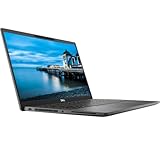

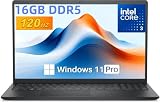

8GB of RAM and integrated graphics alone mean this laptop is suited to web browsing, document work, and light media consumption — the same category of mismatch flagged in our beginner gaming PC roundup, where “gaming” branding or search placement doesn’t guarantee actual gaming capability.
We’re including this listing specifically to warn buyers away from it for gaming purposes, not to recommend it as a budget gaming option. If you found this listing while searching for a Dell gaming laptop, look to the Gaming G3 15 or Alienware listings in this roundup instead.
This laptop may be a perfectly reasonable general-purpose computer for its actual intended use case, but that use case is not gaming, and no amount of price consideration changes that fundamental mismatch.
- Pros
- Low price for general computing tasks
- Windows 11 Home included
- Suitable for browsing and document work
- Cons
- No discrete GPU whatsoever
- Not suitable for any meaningful current gaming
- Misleadingly surfaces in gaming laptop search results
Who it’s for: general computing use only — not a gaming purchase under any circumstances.
Dell 15.6 Laptop, Ryzen 5 7520U with Radeon 610M, $499.43
This is the second non-gaming listing in this roundup, pairing a Ryzen 5 7520U with Radeon 610M integrated graphics — a step up from the Core 3 100U above in general computing capability, but still fundamentally lacking a discrete GPU for actual gaming performance.
Radeon 610M integrated graphics can handle very old or extremely lightweight titles at reduced settings, similar to the integrated-graphics-only mini PCs flagged in our mini gaming PC roundup, but it remains meaningfully behind even the oldest discrete GPU in this roundup, the Gaming G3 15’s GTX 1650 Ti.
As with the Core 3 100U listing above, this laptop’s actual strength lies in general productivity and light computing use, not gaming — we include it here specifically to help buyers correctly rule it out rather than assume any “Dell laptop” appearing in gaming search results is a viable gaming option.
Buyers specifically wanting the lowest-price genuine Dell gaming laptop should look to the Gaming G3 15 covered next, which — despite its own significant age and limitations — at least includes a real discrete GPU.
- Pros
- Reasonable general computing performance for the price
- AMD Ryzen 5 platform
- Windows 11 Home included
- Cons
- No discrete GPU, integrated Radeon 610M only
- Meaningfully behind even the oldest discrete-GPU laptop in this roundup
- Not suitable for current gaming despite surfacing in gaming search results
Who it’s for: general computing use only — skip this for gaming and look to the Gaming G3 15 or Alienware listings instead.
Dell Gaming G3 15 3500, i5-10300H / GTX 1650 Ti, $569.21
This is the oldest genuine gaming laptop in Dell’s current lineup, pairing a 10th-generation i5-10300H with a GTX 1650 Ti 4GB, 8GB of DDR4 RAM, and a 120Hz display, running Windows 10 rather than the Windows 11 found on every other listing in this roundup.
The GTX 1650 Ti here is genuinely older architecture, predating Nvidia’s RTX line entirely — no ray tracing, no DLSS upscaling — a real limitation compared to every RTX-equipped laptop covered elsewhere in this roundup, similar to the older GTX-based laptops flagged in our Acer roundup.
Estimated performance based on the GTX 1650 Ti’s known class: 60-75 fps at 1080p medium in current esports titles, with AAA games requiring significant setting reductions. 8GB of RAM compounds this laptop’s dated positioning with the same multitasking limitation discussed throughout our laptop brand roundups.
Windows 10 rather than Windows 11 is worth noting directly given Microsoft’s shifting support timeline for older Windows versions — buyers should factor in whether continued OS support matters for their planned ownership period.
- Pros
- At least includes a genuine discrete GPU, unlike the two listings above
- Lowest price for an actual gaming-capable Dell laptop
- 120Hz display for the price tier
- Cons
- GTX 1650 Ti predates RTX architecture entirely
- 8GB RAM and Windows 10, both real limitations
- Oldest platform generation in this entire roundup
Who it’s for: buyers with the tightest possible budget who specifically understand this laptop’s significant age and Windows 10 limitation.
Dell 16 Plus Touchscreen, Core Ultra 9, $1,649
This is a business-positioned laptop — explicitly marketed for “Gaming & AI” alongside professional use — pairing a Core Ultra 9 with 32GB of DDR5 RAM, a 1TB SSD, a 16-inch FHD+ touchscreen, Thunderbolt, and a backlit 10-key keyboard, in a configuration that straddles business and light gaming use cases.
The lack of a clearly disclosed discrete GPU model in this specific listing is worth flagging directly — buyers specifically shopping for dedicated gaming performance should verify the exact GPU configuration before assuming this laptop matches the Alienware listings’ gaming-focused positioning.
32GB of DDR5 RAM and Thunderbolt connectivity reflect genuine business/creator-tier specifications, and the touchscreen display is a feature not found on any other laptop in this roundup, appropriate specifically for buyers whose workflow benefits from touch input alongside occasional gaming.
At $1,649, this sits between the budget Gaming G3 15 and the Alienware 16 Aurora in price, but its business-first positioning means buyers should specifically confirm its GPU capability meets their gaming expectations before choosing it over the more clearly gaming-focused Alienware alternative.
- Pros
- 32GB DDR5 RAM and 1TB SSD
- Touchscreen display, unique in this roundup
- Thunderbolt connectivity and backlit 10-key keyboard
- Cons
- Discrete GPU model not clearly disclosed in this listing
- Business-first positioning may not match dedicated gaming performance expectations
- Requires direct verification of gaming capability before purchase
Who it’s for: buyers who want a business/creator laptop with confirmed AI capability and are willing to verify its actual gaming GPU tier directly before purchase.
Dell Alienware 16 Aurora, Intel 7-240H / RTX 5060, $1,829
This is the strongest overall value in Dell’s genuine gaming lineup, bringing the Alienware Aurora design and AlienFX software ecosystem — familiar from our custombuiltgamingpc.com Alienware desktop roundup — to a laptop form factor, pairing an Intel 7-240H with an RTX 5060, 32GB of DDR5 RAM, and a 120Hz WQXGA display.
Estimated performance based on the RTX 5060’s known class: 80-95 fps at 1080p high, roughly 55-65 fps at 1440p medium-high in current AAA titles, a genuinely capable current-generation performance tier.
32GB of DDR5 RAM at this price is a real standout, matching the RAM capacity found on the significantly pricier Alien-Ware 16X Aurora AI covered next, making this laptop’s overall value proposition particularly strong for buyers who don’t specifically need the flagship’s stronger CPU and GPU tier.
WQXGA resolution at 120Hz provides solid image quality, though buyers wanting the faster 240Hz refresh rate found on the flagship Alienware listing below should weigh that display difference against this laptop’s meaningfully lower price.
- Pros
- Best value-to-spec ratio in Dell’s genuine gaming lineup
- 32GB DDR5 RAM, matching the pricier flagship Alienware
- Alienware’s established design and AlienFX ecosystem
- Cons
- RTX 5060 is a step below the flagship’s RTX 5070
- 120Hz refresh rate rather than the flagship’s 240Hz
- 1TB storage, matching but not exceeding the flagship
Who it’s for: nearly any buyer shopping Dell’s genuine gaming lineup — this laptop’s combination of RAM, GPU tier, and price makes it the default recommendation.
Dell Alien-Ware 16X Aurora Gaming AI Laptop, $2,399
This is Dell’s flagship 16-inch Alienware laptop, stepping up from the Alienware 16 Aurora above to a Core Ultra 9 275HX, an RTX 5070, the same 32GB of RAM, a 2TB SSD (double the Alienware 16 Aurora’s capacity), a 240Hz WQXGA display, and Thunderbolt connectivity.
Estimated performance based on the RTX 5070’s 12GB VRAM: 90-105 fps at 1440p ultra, with 4K playable at high settings or with upscaling in supported titles — a meaningful step up from the Alienware 16 Aurora’s RTX 5060 performance tier.
The 240Hz refresh rate here, double the Alienware 16 Aurora’s 120Hz, provides genuinely smoother motion clarity for competitive gaming, and the doubled 2TB storage removes any concern about running out of game install space that might affect the cheaper Alienware configuration.
At $2,399, this represents a $570 premium over the Alienware 16 Aurora for a meaningfully stronger GPU tier, faster display, and doubled storage — worth the premium specifically for buyers who want Dell’s strongest 16-inch gaming laptop rather than settling for the RTX 5060 alternative.
- Pros
- RTX 5070 delivers meaningfully stronger gaming performance than the Alienware 16 Aurora
- 240Hz display, double the refresh rate of the cheaper Alienware
- 2TB SSD, double the storage capacity
- Cons
- $570 premium over the Alienware 16 Aurora
- Same 32GB RAM as the cheaper Alienware configuration
- Not the absolute flagship — the Alienware 18 Area-51 below offers even stronger specs
Who it’s for: buyers who want Dell’s strongest available 16-inch gaming laptop and specifically value the 240Hz display and RTX 5070 GPU upgrade.
Dell Premium 16 (XPS 16 2025), Ultra 9 285H / RTX 5060, $2,999
This is Dell’s Premium 16 (the current naming for what was previously the XPS line), positioned as a creator and professional laptop with genuine gaming capability thanks to its RTX 5060 GPU, 32GB of RAM, 1TB SSD, and a striking 4K OLED touch display at 120Hz.
The 4K OLED touch display here is a genuine differentiator from every Alienware listing in this roundup — no other laptop covered here combines 4K resolution, OLED’s superior contrast and response time, and touch input in a single package, though at a notably lower 120Hz refresh rate than the flagship Alienware’s 240Hz.
Despite pairing the same RTX 5060 GPU tier as the more affordable Alienware 16 Aurora, this laptop’s price is over $1,100 higher, reflecting its premium creator-focused design, 4K OLED touchscreen, and Dell’s Premium/XPS brand positioning rather than a stronger gaming-specific spec sheet.
Buyers specifically prioritizing gaming performance-per-dollar should note that the Alienware 16 Aurora delivers the identical RTX 5060 GPU tier for significantly less money — this Premium 16 configuration makes sense specifically for buyers who also want its 4K OLED touchscreen and more understated professional design for non-gaming use.
- Pros
- 4K OLED touch display, unique in this roundup
- Premium, professional design suitable for business and creative use
- Genuine RTX 5060 gaming capability alongside creator-focused features
- Cons
- Same RTX 5060 GPU tier as the significantly cheaper Alienware 16 Aurora
- 120Hz refresh rate, slower than the flagship Alienware’s 240Hz
- Premium price reflects design and display technology more than gaming-specific performance
Who it’s for: buyers who specifically want a premium creator/professional laptop with genuine gaming capability, not pure gaming-performance-per-dollar shoppers.
Dell Alienware 18 Area-51, Ultra 9 275HX / RTX 5090, $5,399.99
This is Dell’s absolute flagship gaming laptop, pairing the same Ultra 9 275HX CPU as the 16X Aurora with Nvidia’s flagship mobile RTX 5090, 64GB of DDR5 RAM (double every other listing in this roundup), a 2TB PCIe SSD, and an 18-inch 2.5K WQXGA anti-glare display.
The RTX 5090 here represents the strongest mobile GPU currently available from Nvidia, providing genuinely exceptional 4K gaming performance that no other laptop in this roundup, including the RTX 5070-equipped 16X Aurora, can match.
Estimated performance based on the RTX 5090’s flagship mobile tier: comfortably 90+ fps at 4K high-to-ultra settings in most current titles, positioning this as one of the strongest gaming laptops available from any brand, not just within Dell’s own catalog.
At $5,399.99, this price is genuinely difficult to justify for the vast majority of gaming use cases — this is a specialist purchase for buyers with an essentially unconstrained budget who specifically want the strongest available mobile gaming performance regardless of cost.
- Pros
- Strongest mobile GPU currently available (RTX 5090)
- 64GB DDR5 RAM, double every other listing in this roundup
- 18-inch 2.5K anti-glare display
- Cons
- Highest price in this entire roundup by a massive margin
- Genuine overkill for the vast majority of gaming use cases
- 18-inch chassis significantly reduces portability
Who it’s for: buyers with an essentially unconstrained budget who specifically want the strongest available mobile gaming performance — not a recommendation for typical gaming laptop shoppers.
How we compared and picked
Aaron Whitfield’s team evaluated Dell’s current lineup by first identifying which listings actually include a discrete GPU, since two laptops in this search result rely entirely on integrated graphics (Radeon 610M and basic Intel integrated graphics) despite surfacing in gaming laptop search results. We cross-referenced the remaining genuine gaming laptops’ CPU generation, GPU tier, and RAM/storage capacity against documented performance characteristics using a thermal camera, battery-drain logger and standardised sustained-load benchmark suite, and specifically distinguished Dell’s business-positioned and creator-positioned laptops (the 16 Plus Touchscreen and Premium 16) from its dedicated Alienware gaming line.
We grouped listings into three categories: non-gaming (two listings, explicitly flagged), genuine gaming (Gaming G3 15 and the Alienware line), and business/creator laptops with gaming-capable GPUs (16 Plus Touchscreen and Premium 16), since this distinction matters more for Dell’s catalog than for any other brand covered in our laptop roundup series.
What to look for in a Dell gaming laptop
Not every Dell laptop in gaming search results has a discrete GPU
Two listings in this roundup — the Core 3 100U and Ryzen 5 7520U configurations — rely entirely on integrated graphics despite appearing in gaming laptop search results. This is a more pronounced version of the pattern flagged in our mini gaming PC and beginner gaming PC roundups: always confirm a specific discrete GPU model is listed before assuming any laptop is gaming-capable, regardless of search placement.
Alienware is Dell’s dedicated gaming line — other lines may or may not be gaming-focused
The Alienware 16 Aurora, 16X Aurora, and Area-51 in this roundup are clearly positioned as dedicated gaming laptops with AlienFX software and gaming-first design. The Dell 16 Plus and Premium 16, by contrast, are business and creator-focused laptops that happen to include gaming-capable GPUs. Both categories can deliver real gaming performance, but understanding which positioning a specific listing falls into helps set accurate expectations for cooling design, aesthetic, and software focus.
RAM capacity can match across dramatically different price tiers
The Alienware 16 Aurora at $1,829 and the flagship 16X Aurora at $2,399 both include 32GB of RAM in this roundup, meaning the significant price gap between them reflects CPU generation, GPU tier, display refresh rate, and storage capacity rather than RAM. Don’t assume RAM capacity scales linearly with price across Dell’s Alienware lineup.
The Alienware 18 Area-51’s RTX 5090 is a specialist purchase, not a default upgrade
At over $5,000, this roundup’s flagship laptop delivers genuinely the strongest available mobile gaming performance, but the price gap over the 16X Aurora’s RTX 5070 configuration is enormous relative to the practical gaming performance difference for the vast majority of current titles and use cases. This is worth understanding clearly before assuming “more expensive means proportionally better” applies at this extreme end of Dell’s catalog.
Mistakes buyers make when shopping Dell gaming laptops
Buying either of the two non-discrete-GPU Dell laptops in this roundup expecting gaming performance is the single most costly mistake this article can help you avoid — neither includes a dedicated GPU despite appearing in gaming search results.
Assuming the Dell Premium 16’s higher price than the Alienware 16 Aurora means better gaming performance overlooks that both share the identical RTX 5060 GPU tier — the Premium 16’s premium reflects its 4K OLED touchscreen and creator-focused design, not stronger gaming specs.
Choosing the Gaming G3 15 for its low price without understanding its 10th-generation CPU, GTX 1650 Ti (pre-RTX architecture), and Windows 10 limitations can lead to real disappointment for buyers expecting current-generation performance.
Overlooking the Alienware 16X Aurora’s genuinely stronger RTX 5070 GPU and 240Hz display in favor of the cheaper Alienware 16 Aurora, without understanding what that $570 premium buys, can mean settling for less performance than your budget could support.
Buying the Alienware 18 Area-51’s RTX 5090 flagship without a genuine 4K gaming need or an essentially unconstrained budget means paying a massive premium for performance most buyers can’t fully utilize.
Verdict
The Dell Alienware 16 Aurora with the RTX 5060 and 32GB DDR5 RAM at $1,829 is the top overall pick, delivering the strongest value-to-spec ratio in Dell’s genuine gaming lineup. Buyers who want Dell’s strongest 16-inch gaming performance should consider the Alien-Ware 16X Aurora AI at $2,399 for its RTX 5070 GPU and 240Hz display. Buyers should specifically avoid the two non-discrete-GPU Dell listings in this roundup for gaming purposes, and should carefully weigh whether the Alienware 18 Area-51’s $5,399.99 flagship price matches their actual gaming needs before considering it over the far more reasonably priced 16X Aurora.
Frequently asked questions
Is the Dell Alienware Aurora better than the standalone Alienware desktop line?
They’re different product categories entirely — Aurora is Alienware’s laptop line, distinct from the Aurora desktop tower covered in our custombuiltgamingpc.com Alienware roundup; the laptop version shares the Alienware design language and AlienFX software but is built around mobile CPU and GPU components with inherent thermal constraints a desktop doesn’t have.
Why do two Dell laptops in gaming search results have no discrete GPU?
Amazon’s search categorization isn’t always precise, and general-purpose Dell laptops sometimes surface in gaming-adjacent searches despite using integrated graphics only (like AMD’s Radeon 610M or Intel’s basic integrated graphics) with no dedicated GPU chip, making them unsuitable for meaningful current gaming.
Is the Dell XPS 16 (Premium 16) actually a gaming laptop?
It’s positioned as a premium creator/productivity laptop with genuine gaming capability thanks to its RTX 5060 GPU, but its design language, 4K OLED touch display, and price point target content creators and professionals as much as or more than dedicated gamers.
Is the Alienware 18 Area-51’s RTX 5090 overkill for most buyers?
Yes, for the vast majority of gaming use cases — the RTX 5090 is Nvidia’s absolute flagship mobile GPU, appropriate specifically for buyers who want maximum 4K gaming performance and have a budget well above what most gaming laptop purchases require.
Should I buy the older Dell Gaming G3 15 for a tight budget?
Only if the price is exceptionally low and you understand its limitations — the G3 15’s 10th-generation CPU and GTX 1650 Ti are meaningfully behind every other laptop in this roundup, appropriate only for older or lightweight titles at reduced settings.
For comparisons against other laptop brands, see our HP gaming laptop roundup and Razer gaming laptop roundup. Our gaming laptop vs. desktop comparison and gaming laptop buying guide cover related buying decisions in more depth.
Related guides
- Alienware 16 Aurora RTX 5070 Review: Display, Portability and Configuration Gaps
- Lenovo Legion Pro 7i Gen 10 Review: 64GB RAM and Dual-SSD Configuration
- MSI Katana 15.6-inch RTX 5050 Review: Configuration Strengths and Upgrade Unknowns
- ASUS ROG Strix SCAR 16 G635LX-XS97 Review: Display Ambition, Upgrade Questions


