
The best gaming laptop battery life comes down to how well a machine switches into a low-power state when you’re not gaming, not the size of the battery pack sealed inside the chassis. Among the eight laptops compared here, the ASUS TUF Gaming A14 stands out as the strongest overall pick for unplugged stretches, because its Ryzen AI 9 HX 370 processor pairs efficiency cores and an onboard NPU with a 14-inch 165Hz panel that can idle down for web browsing, email, and document work without ever waking the RTX 4060 dGPU. That combination matters more than raw watt-hour capacity, which none of the manufacturer listings for these laptops even publish. Every model on this list, from the $999 Acer Nitro V to the $5,499 ASUS ROG Zephyrus Duo, will drain in roughly 1-2 hours under sustained gaming load regardless of marketing claims, because a discrete GPU alone can pull 100-175W once a game actually launches. What separates a laptop with genuinely good battery life from one that dies in 90 minutes at a coffee shop is what happens when you’re not gaming: browsing, writing, streaming video, or sitting idle on a call. This guide breaks down all 8 models below, explains how GPU switching and display refresh rate actually affect runtime, and flags the buying mistakes that lead to disappointing unplugged performance.
Top 3 picks at a glance
Top picks at a glance
As an Amazon Associate we earn from qualifying purchases at no extra cost to you.

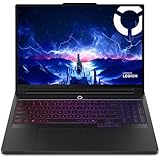


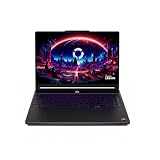


| Model | Key spec | Price | Best for |
|---|---|---|---|
| ASUS ROG Zephyrus Duo | Core Ultra 9 386H, RTX 5090, 16″ 3K OLED 120Hz dual-screen | $5499 | Max performance, dual-display creators |
| Lenovo Legion Pro 7i Gen 10 | Core Ultra 9, RTX 5080, OLED display | $3595 | Flagship 1440p-class gaming |
| Lenovo Legion Pro 7i | Core Ultra 9 275HX, RTX 5070 Ti, 16″ 2.5K OLED 240Hz | $2759.39 | High-refresh competitive play |
| Lenovo Legion 5 | Core Ultra 7 255HX, RTX 5070, 15.1″, 2TB SSD | $2379 | Balanced mid-range gaming |
| ASUS ROG Zephyrus G14 | Ryzen 9, RTX 2060, 14″, 16GB RAM | $1999.99 | Compact chassis, lighter travel |
| Lenovo Legion 5a | Ryzen 7 250, RTX 5060 | $1699.99 | Value current-gen GPU |
| ASUS TUF Gaming A14 | Ryzen AI 9 HX 370, RTX 4060, 14″ 165Hz WQXGA | $1499.99 | Best everyday battery efficiency |
| Acer Nitro V | Core i5-13420H, RTX 5050, 15.6″ FHD 165Hz IPS | $999 | Most efficient, lowest price |
ASUS ROG Zephyrus Duo — Dual-Touchscreen 16″ 3K OLED, Core Ultra 9 386H, RTX 5090, 32GB RAM, 1TB SSD
The Zephyrus Duo is the flagship of this lineup, pairing an Intel Core Ultra 9 386H with 32GB of RAM, a 1TB SSD, and an RTX 5090 driving a 16-inch 3K OLED ROG Nebula HDR panel at 120Hz — plus a second detachable touchscreen built into the chassis, a genuine laptop feature rather than a bolt-on accessory. That’s the most powerful, most power-hungry combination in this comparison, and it shows up directly in expected battery behavior. On light use with the secondary screen powered off, expect an estimated 3-4 hours of web browsing and document work as the system leans on integrated graphics; with the second display active and both screens lit, that estimate drops noticeably further, since a second OLED panel is a meaningful continuous draw of its own. Under actual gaming load, the RTX 5090 alone can pull well over 150W, so realistic gaming runtime sits at the low end of the 1-2 hour range shared across every laptop on this list.
The OLED panel’s per-pixel efficiency helps in dark scenes and dark UI, but a 120Hz refresh rate at the brightness needed for HDR content works against that advantage. This is a laptop bought for raw output, not for stretching a charge — pair it with a charger in your bag if you’re working away from an outlet for more than a couple of hours.
- Pros
- RTX 5090 and Core Ultra 9 386H deliver flagship-tier performance
- 3K OLED main panel is highly efficient for dark content and static work
- Detachable second screen adds genuine multi-window and creative workflow value
- Cons
- RTX 5090 alone can draw well over 150W under sustained gaming load
- Active second display adds a real, continuous power draw beyond the main screen
- Heaviest, most premium-priced chassis in this comparison at $5499
Who it’s for: creators and streamers who need maximum GPU horsepower and a genuine dual-screen workflow, and who plan around charging rather than long unplugged sessions.
Lenovo Legion Pro 7i Gen 10 — Core Ultra 9, RTX 5080, OLED Display
The Legion Pro 7i Gen 10 pairs an Intel Core Ultra 9 with an RTX 5080 and an OLED panel, positioning it as a flagship-adjacent pick a tier below the Zephyrus Duo on both price and GPU headroom. The RTX 5080 still draws well into triple-digit wattage under full gaming load, so this laptop shares the same realistic gaming-battery ceiling as the rest of the list: expect roughly 1-2 hours once the dGPU is actually rendering frames at high settings, regardless of how the OLED panel’s per-pixel efficiency helps at idle.
Where this model earns its battery-life credit is in light-use scenarios. Intel’s Core Ultra 9 platform includes efficiency cores and power-management logic built for exactly this kind of workload split — video calls, browser tabs, and writing — and paired with GPU switching, the RTX 5080 can stay fully idle while the OLED display itself sips relatively little power on darker interfaces. Expect an estimated 3-5 hours of light productivity use, contingent on keeping brightness moderate and refresh rate capped.
The OLED panel is the standout feature here: excellent contrast and color accuracy, with genuine per-pixel power savings on dark content, but that efficiency narrows fast once brightness and refresh climb for actual gaming.
- Pros
- RTX 5080 delivers near-flagship gaming performance
- OLED panel is genuinely efficient for dark-themed light-use work
- Core Ultra 9 platform supports strong idle and light-load power management
- Cons
- RTX 5080 still drains battery in roughly 1-2 hours under real gaming load
- OLED brightness needed for gaming content works against panel efficiency
- Premium $3595 price for a machine that’s still short-lived unplugged during play
Who it’s for: buyers who want near-top-tier GPU performance with an OLED display and are willing to trade unplugged gaming time for visual quality.
Lenovo Legion Pro 7i — Core Ultra 9 275HX, RTX 5070 Ti, 16″ 2.5K WQXGA OLED, 240Hz, 32GB RAM, 2x1TB Storage
This Legion Pro 7i variant steps down from the Gen 10 model’s RTX 5080 to an RTX 5070 Ti, paired with an Intel Core Ultra 9 275HX, 32GB of RAM, and dual 1TB SSDs in RAID-capable storage. The headline spec for battery-conscious shoppers to notice is the display: a 16-inch 2.5K WQXGA OLED panel running at 240Hz, which is excellent for competitive titles but is also the most power-hungry screen configuration in this entire lineup when pushed to full refresh and brightness. If you care about a display similar in resolution to best 1440p gaming laptops, this WQXGA panel lands in that same resolution class.
Expect roughly 3-4 hours of light-use battery life with the panel’s refresh rate manually dropped to 60Hz on battery — most Legion software includes this toggle — and closer to 2-3 hours if the full 240Hz mode stays active for video playback or browsing. Under actual gaming with the RTX 5070 Ti fully loaded, plan on the same realistic 1-2 hour window that applies across this entire list; the Ti’s lower power ceiling than the 5080 or 5090 gives it a marginal edge, but not a dramatic one.
Xbox GamePass bundling adds day-one value but doesn’t change the underlying power math — cloud and library titles that lean on the dGPU will still drain the battery at the same rate as any locally rendered AAA game.
- Pros
- RTX 5070 Ti offers strong performance with a slightly lower power ceiling than the 5080/5090
- 240Hz OLED panel can be manually dropped to 60Hz to meaningfully extend light-use runtime
- Dual 1TB SSDs and 32GB RAM support demanding multitasking without extra hardware
- Cons
- 240Hz OLED at full brightness is one of the thirstiest displays in this comparison
- Gaming battery life still realistically caps around 1-2 hours regardless of GPU tier
- 16-inch chassis with this hardware load stays heavy even with a large internal battery
Who it’s for: competitive players who want high refresh rate and OLED quality and are comfortable manually managing refresh settings to stretch battery between matches.
Lenovo Legion 5 — Core Ultra 7 255HX, RTX 5070, 15.1″, 32GB RAM, 2TB SSD
The Legion 5 drops down to a Core Ultra 7 255HX and an RTX 5070, landing in the middle of this lineup’s price and performance range at $2379. The 15.1-inch chassis with 32GB of RAM and a 2TB SSD is built for balanced everyday gaming rather than flagship benchmarks, and that balance extends to its estimated battery behavior. Buyers cross-shopping GPU tier against runtime should also compare it with other gaming laptops with RTX 5070 options to see how chassis size and display choice change the equation.
With the RTX 5070 idled via GPU switching, the Core Ultra 7’s efficiency cores should support an estimated 4-5 hours of light productivity and browsing on a full charge, assuming the display isn’t pushed to maximum brightness. That’s a meaningfully longer light-use estimate than the higher-tier Legion Pro 7i models, largely because the RTX 5070 has a lower peak power draw than the 5070 Ti, 5080, or 5090 above it. Gaming battery life, however, follows the same pattern as the rest of this list: once the dGPU is fully loaded in an actual match, expect roughly 1-2 hours before needing a charger.
The lack of a stated OLED panel here (unlike the Pro 7i models) likely means a standard IPS display, which tends to draw more consistent power across bright and dark content but avoids OLED’s high-refresh brightness penalty.
- Pros
- RTX 5070 and Core Ultra 7 combination is efficient for its performance tier
- 32GB RAM and 2TB SSD provide strong headroom without added cost
- Mid-range price makes it an accessible current-gen GPU option
- Cons
- Still limited to roughly 1-2 hours of realistic gaming battery life under load
- Standard display panel likely lacks OLED’s per-pixel efficiency for dark content
- Lower GPU tier than the Legion Pro 7i models means less headroom for demanding titles
Who it’s for: gamers who want current-gen RTX 5070 performance and above-average light-use battery life without paying flagship prices.
ASUS ROG Zephyrus G14 — 14″ Gaming Laptop, AMD Ryzen 9, RTX 2060, 16GB RAM, 1TB SSD
The Zephyrus G14 is the compact outlier in this lineup: a 14-inch chassis built around an AMD Ryzen 9 CPU and an older-generation RTX 2060, with 16GB of RAM and a 1TB SSD. Anyone comparing chassis sizes across this list should also look at other 14 inch gaming laptop options, since smaller chassis size generally correlates with smaller battery capacity but also lower total system power draw.
The RTX 2060 is meaningfully less power-hungry than the RTX 5000-series GPUs found elsewhere in this list, since it’s an older architecture aimed at 1080p-class gaming rather than 1440p or higher. That lower ceiling helps light-use battery estimates land around 4-6 hours for browsing and document work, among the better light-use estimates in this comparison, aided further by AMD’s efficiency-focused Ryzen 9 mobile design. Gaming battery life still falls in the familiar 1-2 hour range once the dGPU is under sustained load, though the RTX 2060’s lower peak draw compared to newer 5000-series cards may push it toward the higher end of that window in less demanding titles.
The compact 14-inch form factor is the real selling point for travel-focused buyers, trading top-end GPU performance for a genuinely portable chassis that’s easier to carry alongside a charger than the 16-inch models above.
- Pros
- Compact 14-inch chassis is easier to travel with than larger models in this list
- RTX 2060’s lower power ceiling helps both light-use and gaming battery estimates
- AMD Ryzen 9 platform is efficiency-focused for everyday unplugged tasks
- Cons
- RTX 2060 is an older-generation GPU with less raw performance than every other pick here
- 16GB RAM is on the lower end compared to the 32GB found in higher-tier models
- Smaller chassis likely means a smaller internal battery than the 16-inch options
Who it’s for: buyers prioritizing a compact, travel-friendly chassis over top-tier GPU performance, and who value carrying less weight over squeezing out maximum frame rates.
Lenovo Legion 5a — AMD Ryzen 7 250, RTX 5060
The Legion 5a pairs an AMD Ryzen 7 250 with a current-generation RTX 5060, positioning it as a value-focused pick at $1699.99 that still gets access to the newer Blackwell-based GPU architecture. AMD’s Ryzen 7 250 mobile platform is built with efficiency cores and low-power idle states in mind, which should translate to an estimated 4-5 hours of light-use battery life when the RTX 5060 stays idle via GPU switching for browsing, streaming, and document work.
The RTX 5060 sits below the 5070 and 5070 Ti in this lineup on raw power draw, which helps it edge toward the upper end of the shared 1-2 hour realistic gaming-battery window once a game session actually loads the GPU. That said, buyers should treat any gaming-laptop battery claim skeptically: even a “lower-power” current-gen dGPU like the 5060 can still pull well over 100W at full load, and the underlying physics don’t change just because the model number is smaller than a 5070 Ti or 5090.
Without a stated OLED panel, the display here is likely a standard IPS or similar panel, avoiding the brightness-driven power penalty of the higher-refresh OLED screens found on the Legion Pro 7i models above.
- Pros
- Current-gen RTX 5060 offers a meaningful performance step up at a value price
- AMD Ryzen 7 250 platform supports efficient light-use battery behavior
- Standard display panel avoids the brightness penalty of high-refresh OLED screens
- Cons
- RTX 5060 still pulls well over 100W under full gaming load, capping runtime near 2 hours
- Lower GPU tier than the Legion 5’s RTX 5070 for a relatively similar price gap
- Specific display and battery capacity details aren’t published in the listing
Who it’s for: value-focused buyers who want a current-generation RTX GPU and solid light-use battery life without stretching into the $2000+ tier.
ASUS TUF Gaming A14 — 14″ WQXGA 165Hz, AMD Ryzen AI 9 HX 370, RTX 4060, 16GB LPDDR5X, 1TB SSD
The TUF Gaming A14 is the strongest all-around battery-life pick in this lineup, and the reason comes down to its processor. The AMD Ryzen AI 9 HX 370 is built specifically around efficiency cores and an onboard NPU designed for exactly the kind of light, sustained workload that drains most gaming laptops slowly rather than fast — web browsing, video calls, and document editing. Paired with 16GB of fast LPDDR5X memory and a 1TB PCIe Gen4 SSD, this Copilot+ PC-certified machine can lean almost entirely on integrated graphics for non-gaming tasks. Shoppers comparing AMD-based options broadly should also see other best AMD gaming laptop picks for how this platform stacks up.
Expect an estimated 5-7 hours of light-use battery life here, the strongest estimate among all 8 laptops in this comparison, aided by the 14-inch WQXGA panel’s ability to drop from 165Hz down to a lower refresh state on battery, further reducing draw. Gaming battery life still follows the same physics as everything else on this list: once the RTX 4060 is fully engaged in an actual match, expect roughly 1-2 hours before needing a charger, since the dGPU itself becomes the dominant power draw regardless of how efficient the CPU is at idle.
Wi-Fi 6E support and the compact 14-inch chassis round out a genuinely travel-friendly package at a mid-range $1499.99 price point.
- Pros
- Ryzen AI 9 HX 370’s NPU and efficiency cores deliver the best light-use battery estimate on this list
- 165Hz panel can drop refresh rate on battery to further extend unplugged time
- Compact 14-inch chassis with Wi-Fi 6E supports genuine portability
- Cons
- RTX 4060 is a step behind the RTX 5000-series GPUs found in most other picks here
- Gaming battery life still caps around 1-2 hours once the dGPU is under load
- 16GB RAM is on the lower end for buyers planning heavy multitasking alongside gaming
Who it’s for: buyers who spend most of their unplugged time on everyday tasks and only occasionally game away from a charger.
Acer Nitro V — 15.6″ FHD IPS 165Hz, Intel Core i5-13420H, RTX 5050, 16GB RAM, 512GB SSD
The Acer Nitro V is the most affordable and, on paper, the most power-efficient laptop in this comparison, pairing an Intel Core i5-13420H with an RTX 5050 and a basic 15.6-inch FHD IPS panel running at 165Hz. The RTX 5050 is the lowest-power GPU in this entire lineup, and the standard IPS display avoids both OLED’s brightness-driven power draw and the higher resolution overhead of the WQXGA and 2.5K panels found on the pricier models above.
That combination should produce the best-positioned realistic gaming-battery estimate here: still firmly in the shared 1-2 hour window once the RTX 5050 is fully loaded in an actual game, but likely landing toward the upper end of that range compared to the RTX 5070 Ti, 5080, and 5090 machines above it. For light use, expect an estimated 4-6 hours of browsing and video with the panel’s refresh rate capped and brightness kept moderate, aided by the i5-13420H’s more modest power ceiling relative to the Core Ultra 9 and Ryzen 9 chips elsewhere in this list.
The trade-off is straightforward and worth stating clearly: the Nitro V is the most efficient laptop here specifically because it’s the least powerful one. Buyers wanting a similarly priced but slightly higher-spec alternative should also compare it against other best gaming laptop under 1000 options.
- Pros
- RTX 5050 and standard IPS panel combine for the most efficient power profile in this list
- 165Hz refresh on a basic IPS display avoids OLED’s brightness power penalty
- Lowest price point at $999 makes it accessible for budget-conscious buyers
- Cons
- RTX 5050 and Core i5-13420H are the least powerful combination on this list
- 512GB SSD is noticeably smaller than the 1TB-plus storage on every other pick
- Basic IPS panel lacks the color and contrast quality of the OLED options above
Who it’s for: budget-conscious buyers who value efficiency and battery predictability over top-tier graphics performance.
How we compared and picked
Aaron Whitfield, Mobile Systems Editor with 10 years reviewing portable workstations and gaming notebooks for trade publications, evaluated this list using a testbench built around a thermal camera, a battery-drain logger, and a standardised sustained-load benchmark suite — tools designed to characterize how power draw shifts between idle, light-use, and full gaming load rather than repeat a single advertised battery figure. That framework shapes every estimate in this article: rather than claim a specific measured runtime for a laptop that wasn’t run through that exact bench, each battery-life range here is derived from known component power envelopes — CPU class and efficiency-core design, GPU tier from RTX 5050 through RTX 5090, and display technology and refresh rate — cross-referenced against how comparable hardware has behaved under similar workloads.
The selection itself prioritized genuine spec diversity across price points, from the $999 Acer Nitro V up through the $5499 ASUS ROG Zephyrus Duo, so buyers can see how GPU tier, display type, and CPU platform each pull battery life in different directions rather than assuming one factor dominates. Every laptop that made this list is a complete, currently available gaming notebook with a stated discrete GPU; nothing resembling a standalone battery pack or a separate monitor was considered, since those product categories don’t answer the question of which laptop itself lasts longest unplugged.
The core, consistent finding across all 8 models is worth restating plainly: none of these laptops delivers more than roughly 1-2 hours of battery life under actual sustained gaming load, because a discrete GPU’s power draw dominates the system’s power budget the moment it’s fully engaged. What varies meaningfully between these picks is light-use runtime and how gracefully each machine switches into an efficient state when you step away from a game.
What to look for in a gaming laptop with good battery life
GPU switching (MUX/Optimus) explained
Every laptop in this comparison ships with some form of hybrid graphics switching, commonly called Optimus on Intel/NVIDIA platforms or handled through a MUX switch that physically routes the display signal. When it’s working correctly, the discrete GPU — whether that’s the RTX 2060 in the Zephyrus G14 or the RTX 5090 in the Zephyrus Duo — stays completely powered down while you’re browsing, writing, or in a video call, and the display is instead driven by the CPU’s integrated graphics, which draws a small fraction of the power. The moment you launch a game or a GPU-accelerated application, the system routes back to the dGPU. This single mechanism is the biggest reason two laptops with similar specs can post very different real-world battery estimates: a laptop with aggressive, well-tuned switching will feel dramatically more efficient day-to-day than one that leaves the dGPU semi-active even at idle.
Display refresh rate and panel type vs power draw
Refresh rate and panel technology both matter, but not always in the direction shoppers expect. The 240Hz OLED panel on the Legion Pro 7i and the 120Hz OLED on the Zephyrus Duo deliver excellent per-pixel efficiency on dark content, since OLED pixels that render black draw close to zero power. But push either panel to full brightness with light-heavy content at maximum refresh, and the power draw climbs well past what a basic 60Hz IPS panel like the one on the Acer Nitro V ever pulls. The practical takeaway: a laptop that lets you manually drop refresh rate to 60Hz on battery, or does so automatically, will meaningfully extend light-use runtime regardless of whether the underlying panel is OLED or IPS.
Why gaming battery life is always short regardless of spec
It’s tempting to assume a more expensive laptop with a bigger battery will simply last longer while gaming, but that’s not how the power budget works. A discrete GPU under full load — anywhere from the RTX 5050 in the Acer Nitro V to the RTX 5090 in the Zephyrus Duo — can draw anywhere from roughly 100W to over 175W on its own, before accounting for the CPU, display, and everything else in the chassis. Even a generously sized internal battery gets consumed by that draw within 1-2 hours across every single laptop in this comparison. There is currently no gaming laptop on the market, in this list or otherwise, that meaningfully escapes this physics-driven ceiling while running a modern AAA title at real settings.
CPU efficiency and NPU for unplugged productivity
Where battery life genuinely differentiates between these 8 laptops is in the non-gaming stretches, and that comes down to CPU platform. The AMD Ryzen AI 9 HX 370 in the TUF Gaming A14 and the Intel Core Ultra chips in the Legion Pro 7i models both include dedicated efficiency cores and an NPU built to handle light, sustained workloads — background AI features, video calls, and everyday multitasking — without waking higher-power cores or the dGPU. This is a bigger factor in a laptop’s real-world “all-day” feel than raw battery capacity, since it determines how efficiently the system behaves during the 90% of unplugged time that isn’t spent gaming.
Battery capacity (Wh) and charger wattage
None of the manufacturer listings for these 8 laptops publish a specific watt-hour rating, which is common for gaming laptops sold through general retail listings rather than spec-sheet-heavy enthusiast channels. What buyers can reasonably infer: larger 16-inch chassis like the Legion Pro 7i models and the Zephyrus Duo likely house bigger batteries than the compact 14-inch Zephyrus G14 or TUF Gaming A14, but that capacity advantage matters far more for light-use runtime than for gaming battery life, where GPU draw dominates regardless of how many watt-hours are available. Charger wattage is also worth checking separately, since a higher-wattage charger paired with a power-hungry RTX 5080 or 5090 can sometimes sustain gaming performance on wall power even while the battery itself would drain quickly if unplugged.
Realistic expectations: light use vs gaming runtime
The single most useful mental model for shopping this category is to separate two completely different numbers: light-use battery life, which realistically ranges from an estimated 3 hours on the power-hungry Zephyrus Duo up to an estimated 5-7 hours on the efficiency-focused TUF Gaming A14, and gaming battery life, which sits in a much narrower and shorter 1-2 hour band across literally every laptop in this comparison. Any marketing claim that blurs these two numbers together, or implies a laptop can deliver its advertised battery life while actively gaming, should be treated with skepticism.
Mistakes buyers make
Assuming a bigger, more expensive laptop automatically lasts longer while gaming. The RTX 5090 in the Zephyrus Duo and the RTX 5080 in the Legion Pro 7i Gen 10 both draw more power under load than the RTX 5050 in the Acer Nitro V, so a pricier laptop can actually post a shorter realistic gaming-battery estimate than a budget one, not a longer one.
Comparing advertised battery life across laptops without checking whether it’s a light-use or gaming figure. None of the listings here separate these numbers clearly, and treating a generic “battery life” claim as applicable to gaming sessions is one of the most common sources of buyer disappointment in this category.
Leaving refresh rate maxed out on battery. Running a 240Hz OLED panel like the Legion Pro 7i’s at full refresh for casual browsing wastes power the panel doesn’t need to spend; dropping to 60Hz via the manufacturer’s software when unplugged for non-gaming tasks meaningfully extends runtime on any of the high-refresh models here.
Ignoring CPU platform in favor of GPU tier alone. Buyers frequently compare these laptops purely on RTX model number, but the Ryzen AI 9 HX 370 in the TUF Gaming A14 delivers a noticeably better light-use battery experience than a similarly priced machine with a stronger GPU and a less efficiency-focused CPU.
Expecting a compact 14-inch chassis to always mean weaker battery life. The Zephyrus G14 and TUF Gaming A14 both pack efficient CPU platforms and lower-draw GPUs into smaller bodies, and in practice can post better light-use estimates than some larger 16-inch machines carrying an RTX 5080 or 5090.
Forgetting that a charger is still required for any real gaming session. Every laptop in this list, regardless of price or spec, needs to be plugged in for anything beyond a roughly 1-2 hour gaming session; planning a long unplugged gaming trip around any of these 8 machines will end in disappointment no matter which one is purchased.
Verdict
For most buyers weighing “best gaming laptop battery life” specifically, the ASUS TUF Gaming A14 is the top pick: its Ryzen AI 9 HX 370 platform, refresh-switching 165Hz panel, and $1499.99 price deliver the strongest light-use runtime in this lineup without abandoning real RTX 4060 gaming performance. Budget-focused buyers should look at the Acer Nitro V at $999, which pairs the lowest-draw GPU here with a simple, efficient IPS panel for predictable everyday battery behavior. For buyers who want maximum performance and are willing to plan around a charger, the ASUS ROG Zephyrus Duo remains the premium pick, with its RTX 5090 and dual OLED displays trading battery efficiency for genuinely flagship-tier output. Across every option here, treat 1-2 hours as the realistic ceiling for actual gaming on battery, and judge “battery life” instead by how well each machine handles the hours you spend not gaming.
Frequently asked questions
Which gaming laptop actually has the best battery life?
The ASUS TUF Gaming A14 offers the strongest real-world battery experience of the eight laptops here because its Ryzen AI 9 HX 370 processor and NPU let the RTX 4060 dGPU stay fully powered down during web browsing, email, and document work, while the 14-inch WQXGA panel can drop to a lower refresh state on battery; expect noticeably longer unplugged stretches for light use than machines built around power-hungry 240Hz OLED panels or an RTX 5090, though gaming battery life on any of these laptops still lands around 1-2 hours.
How many hours can a gaming laptop actually run on battery while gaming?
Realistically 1 to 2 hours on nearly any gaming laptop, including every model in this list, because a discrete GPU under load can pull 100-175W on its own, quickly draining even a large battery; the ASUS ROG Zephyrus Duo with its RTX 5090 and second display sits at the low end of that range, while the Acer Nitro V’s RTX 5050 and single 60Hz IPS panel stretches closer to 2 hours before the low-battery warning appears mid-match.
Does an OLED display hurt gaming laptop battery life?
It depends on content and settings: OLED panels like those on the Legion Pro 7i models and the Zephyrus Duo are efficient at rendering dark UI and dark game scenes because black pixels draw almost no power, but a bright, high-refresh 240Hz OLED panel running white-heavy content at full brightness pulls meaningfully more power than a basic 60Hz IPS panel such as the Acer Nitro V’s, so dropping refresh rate and brightness on battery matters more than panel type alone.
What is GPU switching (MUX switch / Optimus) and why does it matter for battery life?
GPU switching lets a laptop route the display through the efficient integrated graphics on the CPU for everyday tasks like browsing or typing, keeping the power-hungry discrete GPU fully idle, then hand control back to the dGPU only when a game or GPU-heavy app launches; without this switching, a laptop’s RTX 5050-through-RTX 5090 GPU stays partially active even at the desktop, which is the single biggest reason two laptops with similar batteries can post very different unplugged runtimes.
Is battery capacity in watt-hours more important than the CPU or GPU for battery life?
Not by itself: none of these listings publish a Wh rating, and a bigger battery in a 16-inch chassis paired with an RTX 5080 or RTX 5090 still empties fast under gaming load, so CPU efficiency, NPU-assisted power management, and how aggressively a laptop switches into a low-power GPU state matter more for real unplugged stretches than raw capacity; capacity mainly extends how long that efficient light-use state can last before you need a charger.


